 FiberRemedy
The reading library
All articles & guides
30 reads about fabric care and laundry. Choose a question, a picture or a perspective.
Explainers
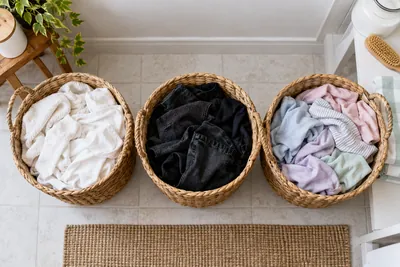
Laundry for beginners: what actually changes the result
A successful wash starts before the machine runs.
Why sorting laundry matters beyond lights and darks
Color is only one way a mixed load can go wrong.

A stain just happened. What should you do first?
The first useful move is to identify the fabric and the spill.
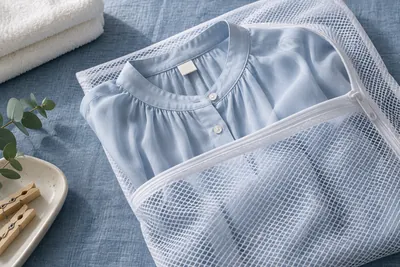
Why a mesh laundry bag helps—and what it cannot do
A mesh bag can organize suitable small or delicate items.
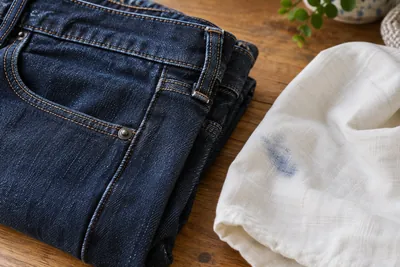
Why the first wash deserves a little extra attention
A new garment introduces an unknown into your laundry routine.
How to read a care label without memorizing every symbol
Read the label as a sequence of decisions: washing, bleaching, drying, ironing and professional care.

The laundry-day plan that starts with the drying rack
The bottleneck is often what happens after washing.
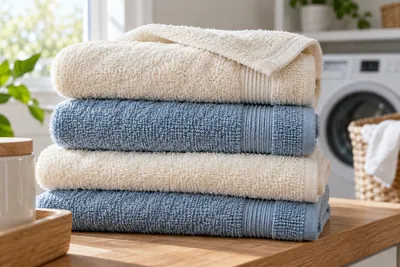
Why do clean towels sometimes feel stiff?
Stiffness is a result to investigate, not a diagnosis by itself.
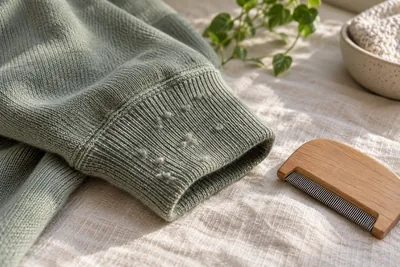
Why delicate clothes need a plan, not a stronger product
Delicate care is often about controlling the process.

Five laundry habits worth checking before buying another product
When laundry disappoints, start with the routine you can observe.
In pictures
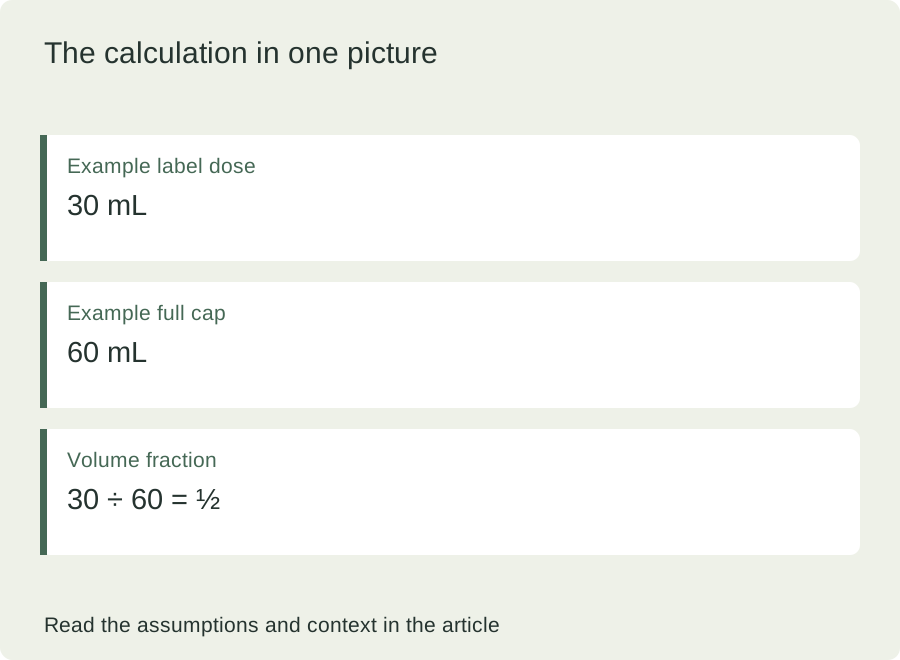
One picture explains detergent caps, milliliters and guesswork
A cap is a container, not a standardized dose.
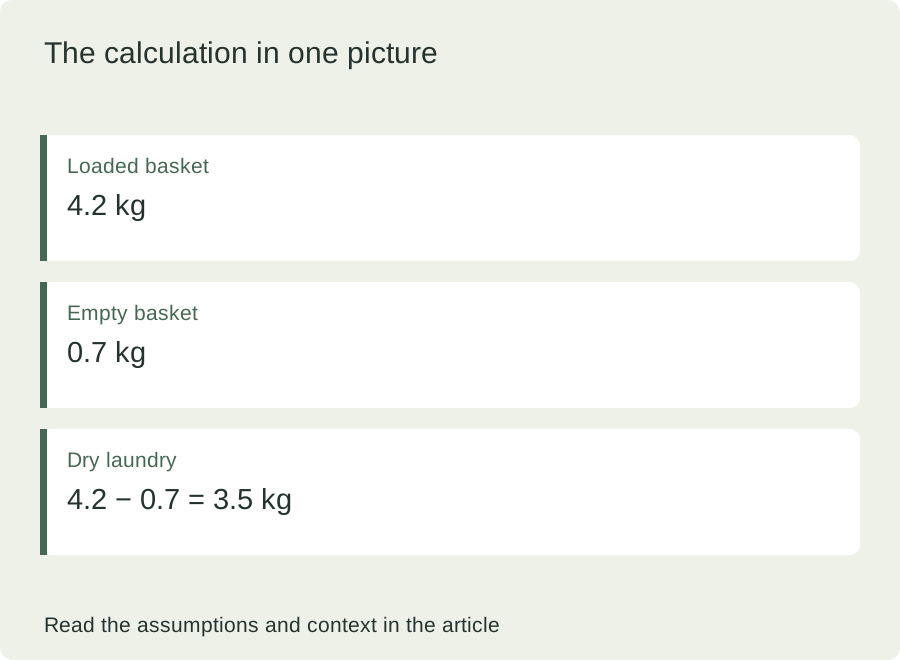
How much laundry is a full load? Start with dry weight
A drum that looks spacious can still contain an unsuitable load.
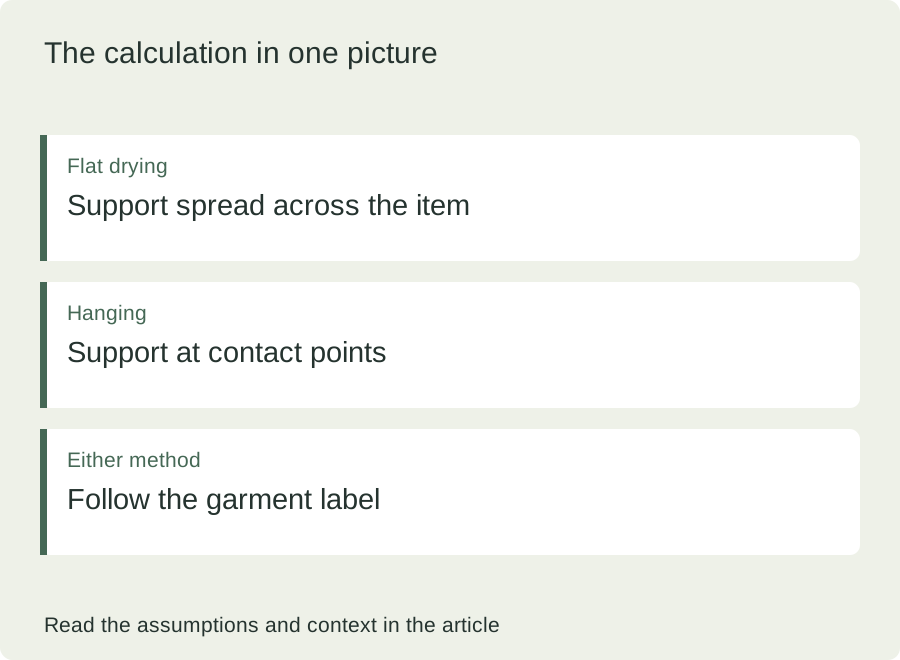
Flat dry or hang dry? One diagram explains the difference
Drying instructions describe how an item is supported while it dries.
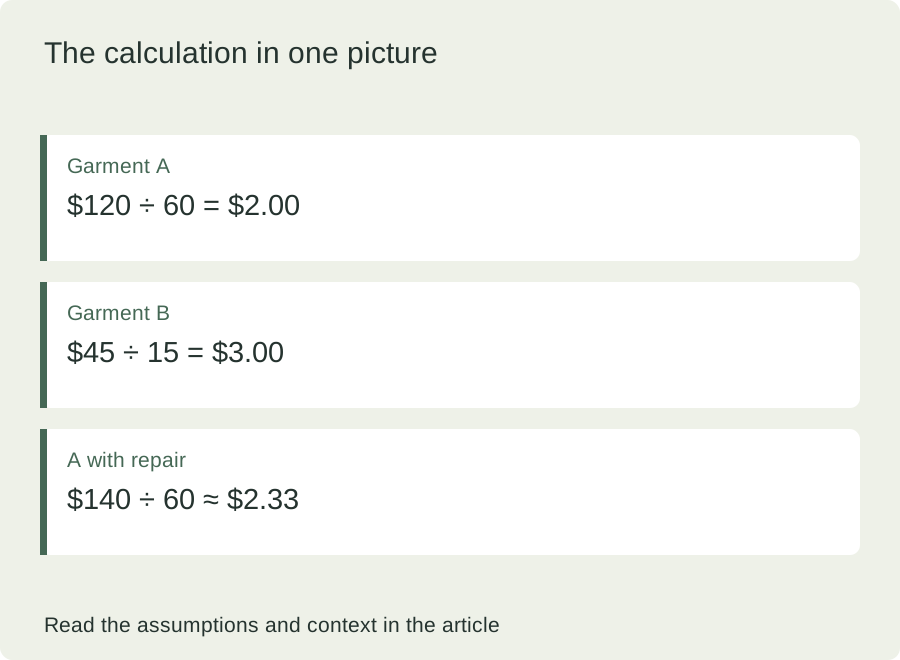
One chart shows what cost per wear can—and cannot—tell you
A price tag describes one purchase.
Perspectives
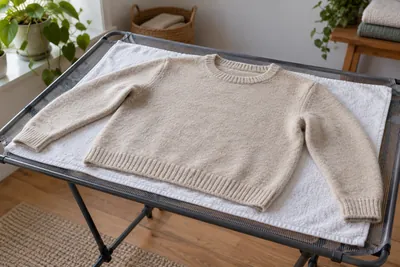
Why a favorite sweater can feel harder to replace than it should
The attachment may be less about luxury than about familiarity: a fit you trust, a texture you enjoy and memories that arrived while you were wearing it.
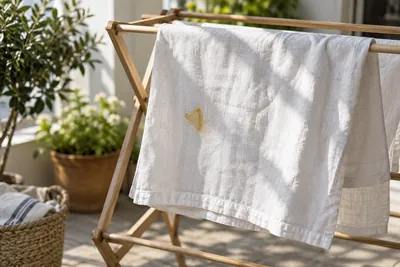
What do people who love natural fibers actually value?
Texture, drape, care rituals and personal associations can all be part of the appeal.
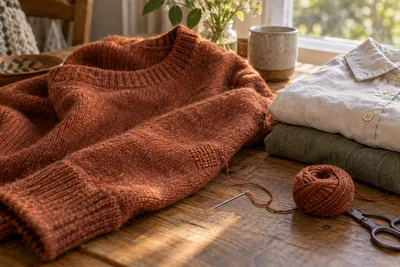
Repair or replace? A calmer way to decide about clothes
The best decision is not always the most romantic one.
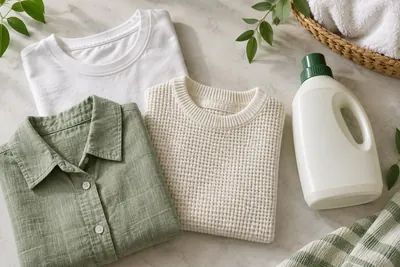
Why cared-for clothes can feel more considered than new ones
A wardrobe can feel deliberate because it fits your life.
Technical guides
Cellulase, pilling and faded cotton
A dark shirt can look pale because of abrasion, deposits or dye loss.
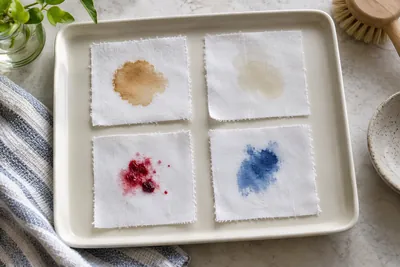
Identify stain types before choosing a treatment
Coffee with milk is not just a tannin stain, and a salad dressing can contain oil plus colored spices.

Hard water and laundry residue
A stiff towel does not prove that hard water is the cause.

How much HE laundry detergent should you use?
Two tablespoons is not a universal dose.
Laundry enzymes: choose by stain and fabric
An enzyme name indicates a type of substrate the enzyme can act on; it does not describe the entire detergent.
Denim dye transfer and colorfastness
A denim item can transfer color through rubbing even without being washed.
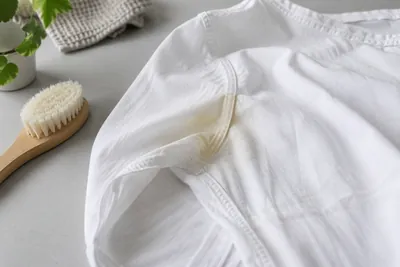
Yellow underarm stains and deodorant buildup
An underarm mark can include body oil, product residue and a change in fabric color.
Oxygen bleach vs chlorine bleach
The word oxygen does not make a product suitable for every fabric.
Sunlight and food stains: benefits and limits
Turmeric and tomato stains can change appearance with light, but the garment’s own dye may also fade.
Towel buildup: when a normal wash is enough
A bath of dark water is not a measurement of how dirty a towel was.
Protein stains: temperature and first treatment
A fresh food or blood stain is easier to assess before a hot wash or dryer cycle changes it.
Wool and cashmere: washing without felting
Two wool sweaters can have different care labels because their construction and finishing differ.