 FiberRemedy
Perspectives
What do people who love natural fibers actually value?
Texture, drape, care rituals and personal associations can all be part of the appeal.
Perspective. An editorial reflection on preferences and everyday life. It does not report a survey or classify people by their tastes.
Before you start
Texture, drape, care rituals and personal associations can all be part of the appeal. A fabric preference does not reveal a person’s character or social status.
Start with the experience of the fabric
Someone may enjoy the hand of a particular wool knit, the changing appearance of linen or the weight of a cotton shirt. These are specific preferences, not proof that every natural-fiber garment feels better than every alternative. Construction, finish, fit and individual sensitivity all belong in the experience.
The idea can matter too
For some readers, a material carries associations with a place, a craft or a family habit. Those associations can be meaningful without serving as scientific claims about performance. It helps to separate I enjoy this story from this garment has been independently shown to perform better.
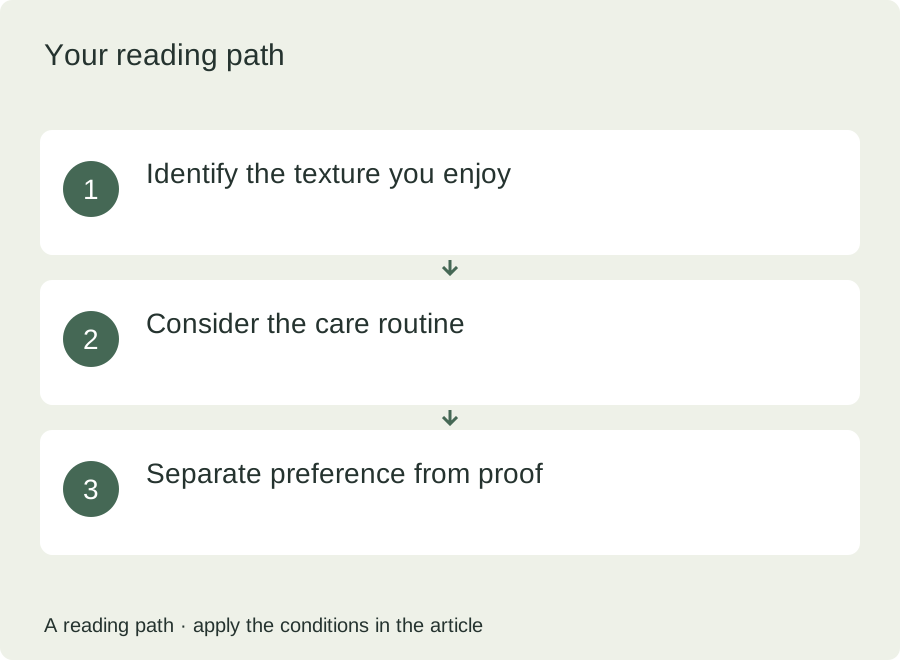
Care is part of the choice
A preferred fabric may require a routine that fits one household and frustrates another. Time, drying space and willingness to follow particular care instructions are practical considerations. Choosing something easier for your situation is not a failure of taste. A garment has to live in your real wardrobe.
Ask about the garment instead of the type of person
If a friend says they only like linen, a useful follow-up is what they enjoy about a particular linen garment. They may mention its texture, looseness, appearance or an association with summer. Those answers tell you more than labeling them refined or traditional. They also leave room for exceptions: they may dislike another linen piece because of its cut or care requirements. A material preference can be interesting without becoming an identity test. The conversation becomes richer when it stays close to lived preferences and the specific object rather than a flattering stereotype.
Avoid using material as a personality test
Natural-fiber preference cannot reliably classify someone as refined, authentic or environmentally responsible. Nor does a synthetic blend reveal the opposite. Ask what the particular garment offers and what evidence supports any performance or impact claim. That is a more useful conversation than ranking people by a label.
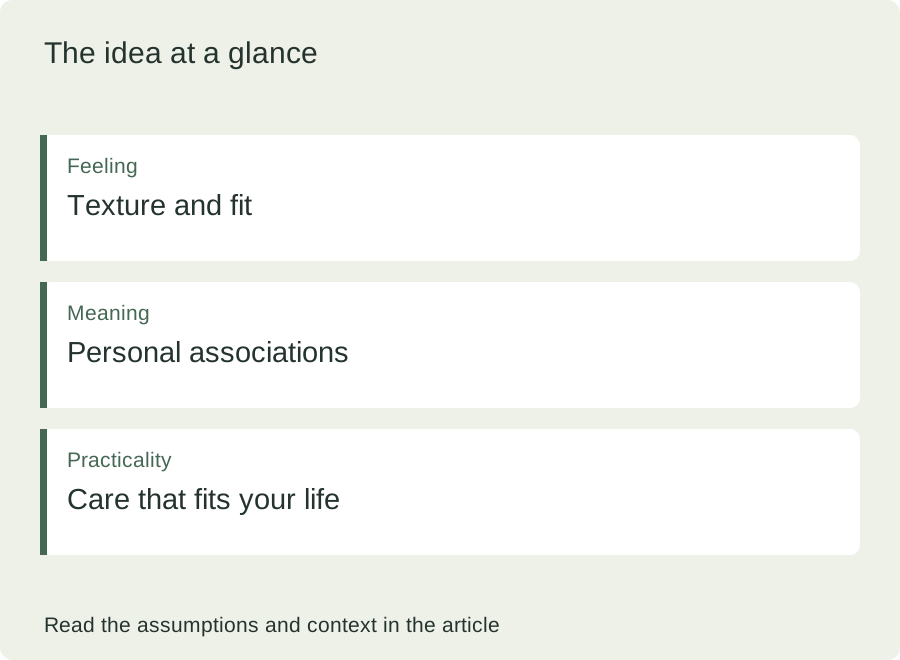
Practical check: what to observe
Use the questions below to consider your own preferences. This article is an editorial perspective, not a survey or a way to classify other people.
- Identify the texture you enjoy
- Consider the care routine
- Separate preference from proof
Are natural fibers always the more responsible choice?
That broad claim needs more evidence than a fiber name. Impacts depend on the specific product and its life cycle; this opinion article does not provide a comparative environmental assessment.
For more context, see the topic FAQ and glossary. A reference value or example should be read with its units, assumptions and product-specific conditions.
Sources and scope
This is original editorial commentary. Examples of preferences are illustrative, not findings from a survey or psychological study. Read the editorial policy for sourcing, AI assistance and corrections.
Put the explanation to work
Continue reading
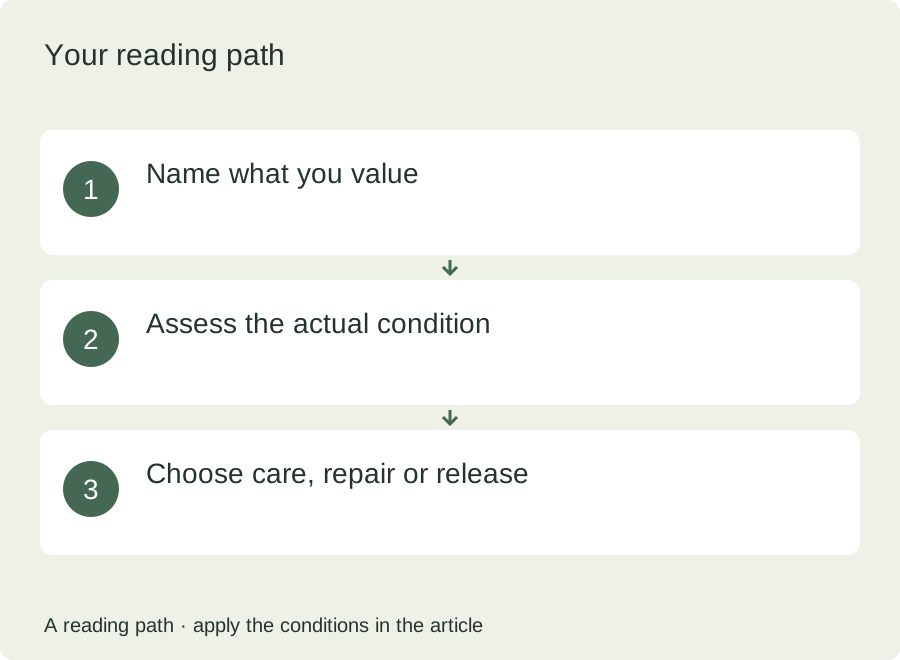
Spot a questionable claim or a calculation issue? Read our correction process and contact information. Examples and illustrations are educational; they do not establish product suitability or a laboratory result.