 FiberRemedy
Perspectives
Why a favorite sweater can feel harder to replace than it should
The attachment may be less about luxury than about familiarity: a fit you trust, a texture you enjoy and memories that arrived while you were wearing it.
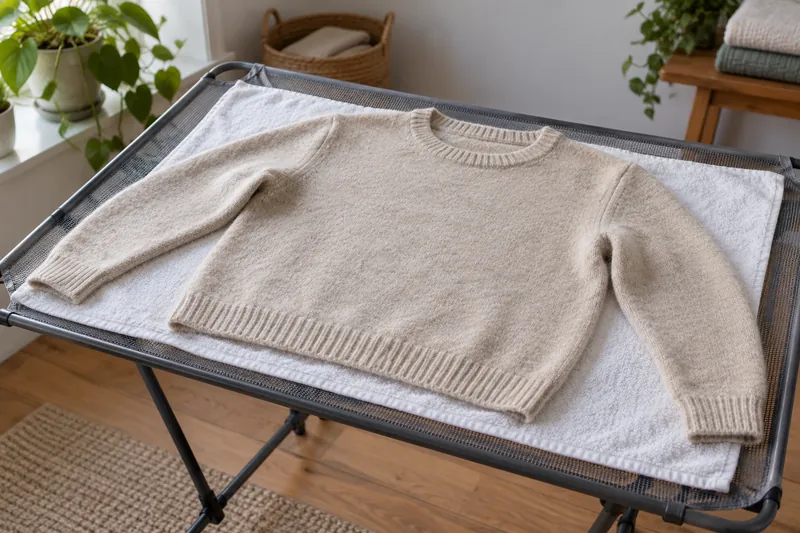
Perspective. An editorial reflection on preferences and everyday life. It does not report a survey or classify people by their tastes.
Before you start
The attachment may be less about luxury than about familiarity: a fit you trust, a texture you enjoy and memories that arrived while you were wearing it.
Familiarity removes small decisions
A dependable garment can simplify an ordinary morning. You already know how it fits under a coat, whether the collar bothers you and which other clothes work with it. Replacing it means learning those details again. That practical familiarity is a reasonable source of attachment, even when the item was never expensive.
Memory belongs to the wearer
A sweater may be associated with a trip, a person or a quiet period of life. Another person cannot read that history from its appearance. This is why describing a garment as objectively worth keeping misses part of the decision. Sentimental value is personal, and it need not be justified by a resale price.
Care can support the attachment
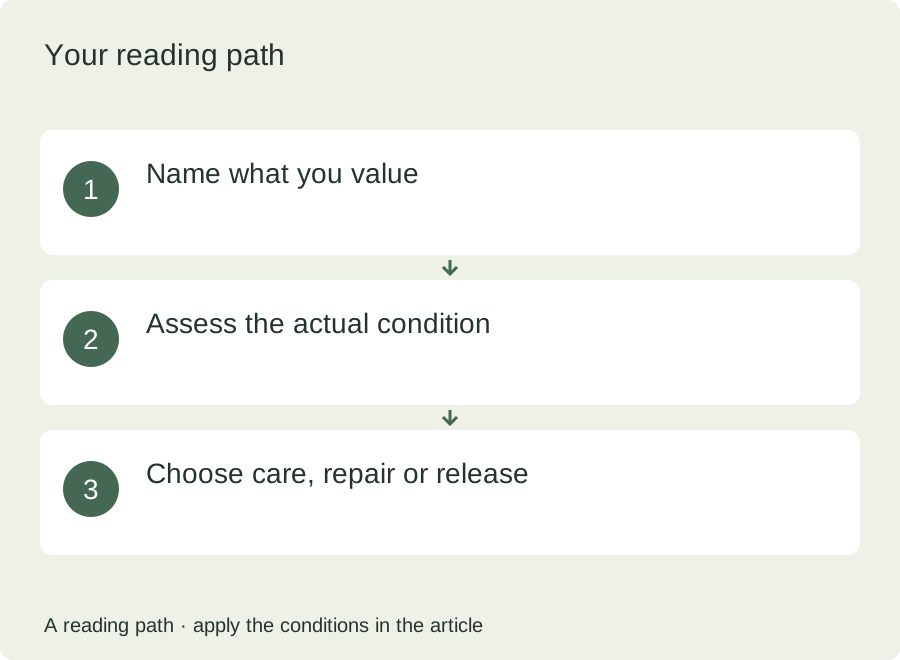
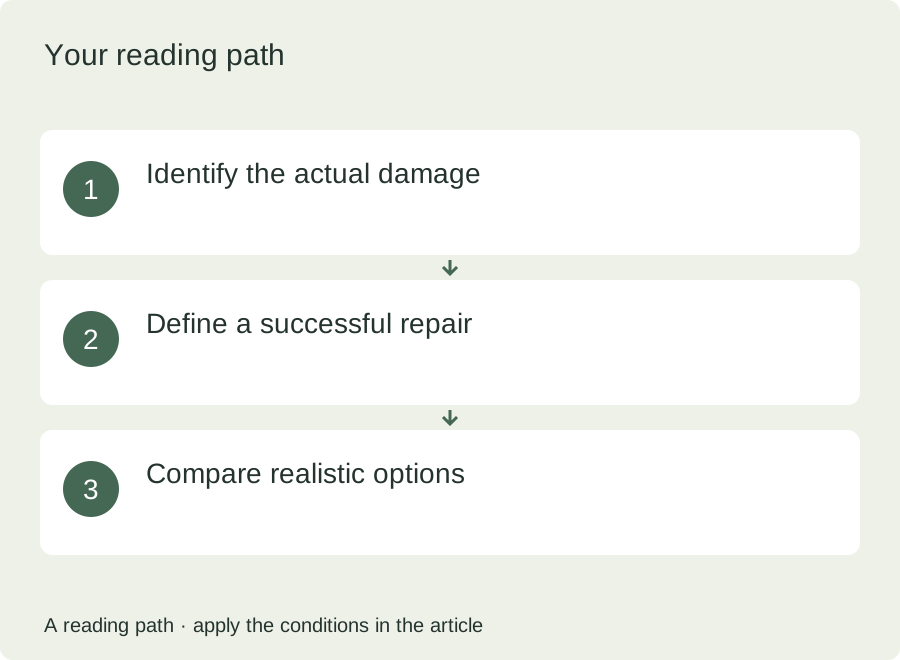
Knowing the appropriate wash, drying and storage routine can make keeping an item feel manageable. It does not guarantee indefinite life. Consider a suitable repair when condition and construction allow it, and ask a professional about work beyond your skill. Keeping an item should not require pretending that every kind of damage is reversible.
The value can be difficult to photograph
A favorite sweater may look ordinary on a hanger while feeling exactly right during a familiar part of the day. Its meaning can live in details that a resale listing never captures: sleeves that sit comfortably, a texture associated with a person or a fit that no longer requires thought. You do not need to make that attachment sound grand. Equally, the memory does not require the garment to remain in daily service forever. A considered decision allows affection and practical condition to sit beside each other without forcing one to erase the other.
Letting go can also be thoughtful
If the garment no longer fits, feels comfortable or serves its role, you are allowed to stop wearing it. Photographing a detail or retaining a small memory can be enough. Caring about clothing does not require turning every item into a permanent obligation.
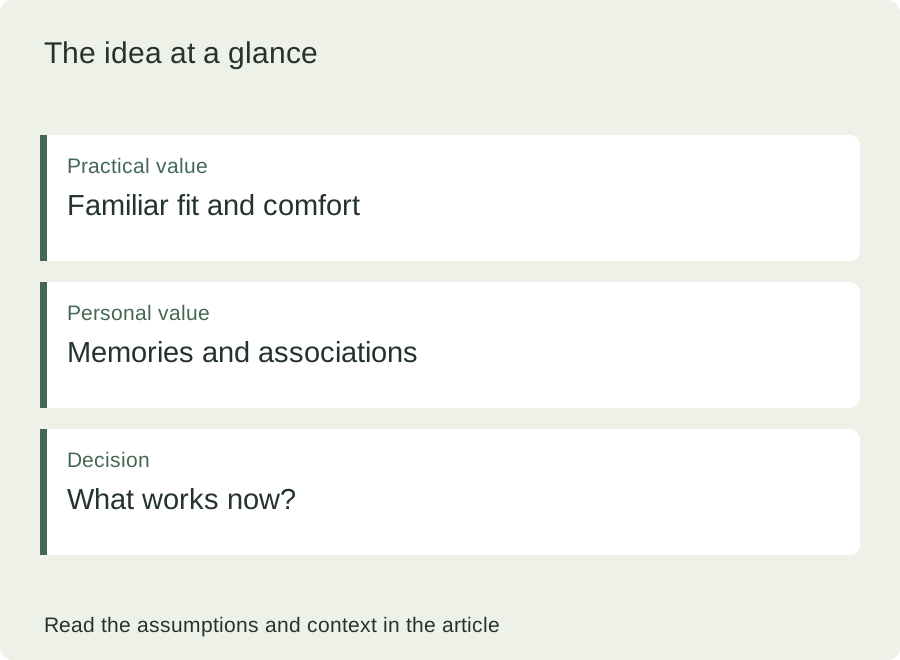
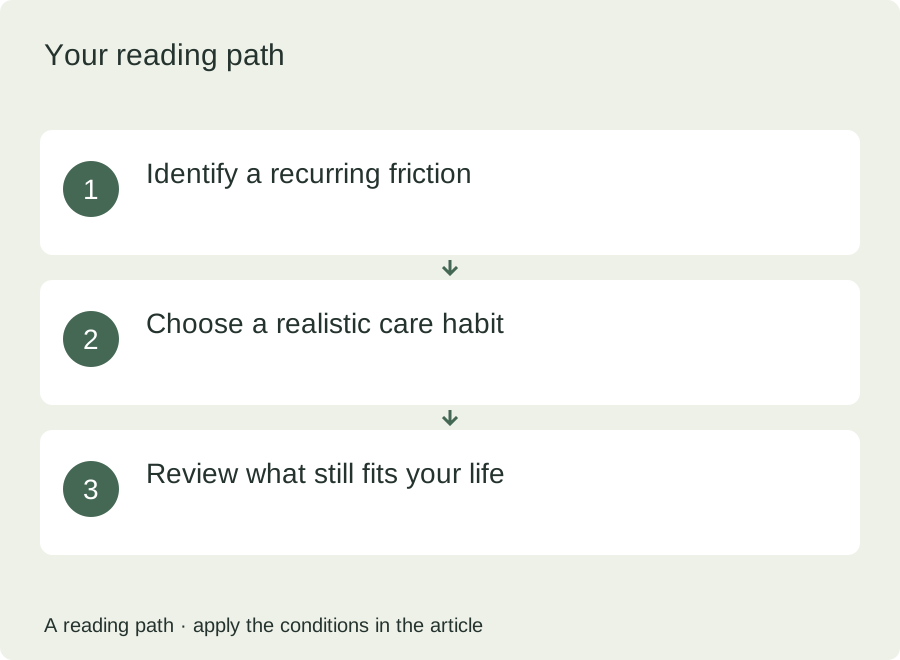
Practical check: what to observe
Use the questions below to consider your own preferences. This article is an editorial perspective, not a survey or a way to classify other people.
- Name what you value
- Assess the actual condition
- Choose care, repair or release
Does attachment mean I should repair it at any cost?
No. Sentiment, comfort, repair feasibility and your budget can all matter. A thoughtful decision may be to repair, retain as a keepsake or let it go.
For more context, see the topic FAQ and glossary. A reference value or example should be read with its units, assumptions and product-specific conditions.
Watch with context
How to Machine Wash a Wool Sweater
From Woolmark. An external demonstration to accompany the explanation. Follow the instructions for your own equipment or garment; a video is not evidence for every claim on this page.
Player requested. If the player remains blank or reports an error, use the direct YouTube link below.
Loading the player connects to YouTube and may share your IP address and browser information. YouTube may process data and use storage under its own policies. Video privacy details.
If playback is unavailable, watch “How to Machine Wash a Wool Sweater” on YouTube.
Sources and scope
This is original editorial commentary. Examples of preferences are illustrative, not findings from a survey or psychological study. Read the editorial policy for sourcing, AI assistance and corrections.
Put the explanation to work
Continue reading
Spot a questionable claim or a calculation issue? Read our correction process and contact information. Examples and illustrations are educational; they do not establish product suitability or a laboratory result.