 FiberRemedy
Stain Classification & Redox Chemistry
Oxygen bleach vs chlorine bleach
The word oxygen does not make a product suitable for every fabric.
Before you start
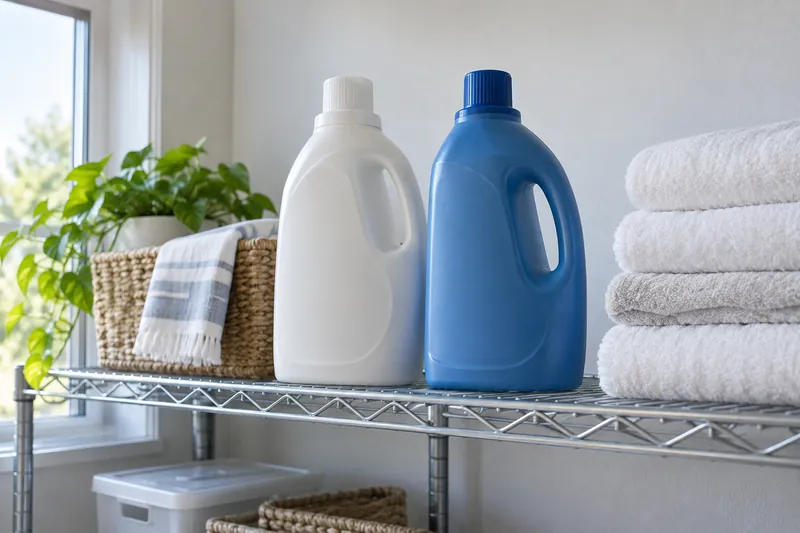
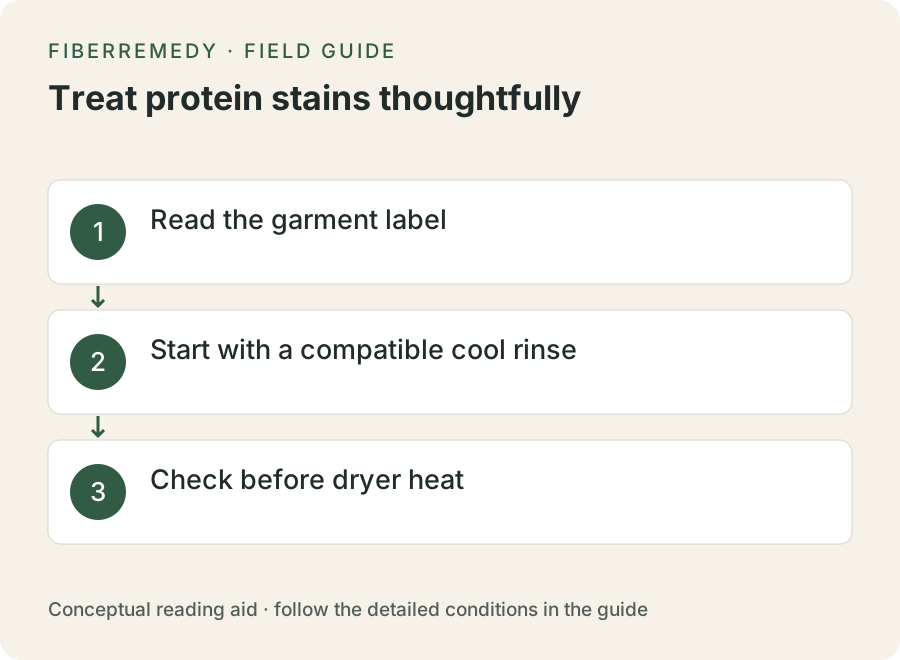
The word oxygen does not make a product suitable for every fabric. Temperature, dyes, finishes, trims and fiber composition can all limit use. The garment label and the exact bleach product must both permit the treatment before concentration or soak time becomes relevant.
When a white cotton dress shirt, tablecloth, or set of bath towels develops dingy yellowing or a red wine spill, reaching for a jug of liquid chlorine bleach (sodium hypochlorite, NaOCl) is a reflex passed down from mid-20th-century laundry rooms. Yet textile chemists and commercial laundries rarely touch NaOCl for routine apparel: repeated hypochlorite bleaching slices the degree of polymerization (DP) of cotton cellulose in half, turns white shirts containing spandex or sunscreen more yellow, and destroys enzyme detergents on contact. Understanding the redox potential (E°), acid-base pK_a equilibrium, and chromophore selectivity of sodium percarbonate (2Na₂CO₃ · 3H₂O₂, oxygen bleach) versus sodium hypochlorite (NaOCl) explains why every care tag displaying a striped triangle (Δ //; see our ISO 3758 & ASTM D5489 Care Symbol Decoder) mandates oxygen bleach.
Molecular Structure & Aqueous Equilibrium of Sodium Percarbonate (2Na₂CO₃ · 3H₂O₂)
Despite its name, sodium percarbonate (the active ingredient in OxiClean, Molly’s Suds Oxygen Whitener, and European heavy-duty laundry powders) is not a true peroxycarbonate salt; X-ray crystallography shows it is a crystalline perhydrate adduct containing exactly two moles of anhydrous sodium carbonate (Na₂CO₃, washing soda, 67.5% by mass) hydrogen-bonded to three moles of hydrogen peroxide (H₂O₂, 32.5% by mass) (M = 314.02 g/mol, active oxygen content 15.28%).
When you dissolve sodium percarbonate in warm water (40–60 °C / 104–140 °F), it dissociates immediately into carbonate ions (CO₃²⁻, which raise the solution to pH 10.2–10.7 and soften hard water) and free hydrogen peroxide (H₂O₂). Why is that alkaline pH 10.5 built right into the crystal? Because un-ionized H₂O₂ (pK_a = 11.62 at 25 °C, dropping to ~10.9 at 50 °C) is a sluggish bleaching agent in neutral water (pH 7, such as a brown pharmacy bottle of 3% H₂O₂). Raising the pH to 10.5 deprotonates a substantial fraction of H₂O₂ into the highly nucleophilic perhydroxyl anion (HOO⁻):
1. Dissolution of Sodium Percarbonate Adduct in Warm Water:
   2 Na₂CO₃ · 3 H₂O₂(s)  ──[H₂O]──>  4 Na⁺(aq) + 2 CO₃²⁻(aq) + 3 H₂O₂(aq)

2. Carbonate Buffering to pH ~10.5 & Perhydroxyl Anion Deprotonation (pKa ≈ 11.6 at 25°C):
   CO₃²⁻(aq) + H₂O(l)      ⇌  HCO₃⁻(aq) + OH⁻(aq)           (buffers wash liquor at pH 10.4–10.7)
   H₂O₂(aq)  + OH⁻(aq)     ⇌  HOO⁻(aq) (Active Perhydroxyl Nucleophile!) + H₂O(l)

3. Selective Nucleophilic Attack on Conjugated Stain Chromophores:
   HOO⁻ + -C=C-C(=O)- (Colored Quinone / Polyphenol / Tannin)  ──>  Colorless Epoxide / Carboxylate Fragments
   (Zero chlorine ions; decomposes cleanly into O₂, H₂O, and sodium carbonate!)
Why Sodium Hypochlorite (NaOCl) Destroys Fabrics and Causes Paradoxical Yellowing
Household liquid chlorine bleach is a 5.25% to 8.25% aqueous solution of sodium hypochlorite (NaOCl) stabilized with 0.5–1.0% excess sodium hydroxide (NaOH) at pH 11.5–12.8. In water, hypochlorite (OCl⁻) is in equilibrium with hypochlorous acid (HOCl, pK_a = 7.53):
- Excessive Redox Potential (
E° = +0.89 VforOCl⁻in base;+1.48 VforHOCl): While the perhydroxyl anion (HOO⁻) selectively attacks electron-deficient conjugatedC=CandC=Obonds in wine, coffee, and tea stains (Four Classes of Stains Guide), hypochlorite (OCl⁻ / HOCl) is strong enough to oxidize theC2,C3, andC6hydroxyl groups (-CH₂OH) of cotton cellulose itself into aldehyde (-CHO) and carboxylic (-COOH) groups—forming oxycellulose. Oxycellulose breaks theβ(1→4)glucose chain during hot alkaline laundering, causing white cotton collars, cuffs, and sheets to tear prematurely after15–25bleach cycles. - Paradoxical Yellowing of White Shirts: Why do white T-shirts or dress shirts often come out of a chlorine bleach bath more yellow than they went in?
- Chlorination of Sweat Proteins & Spandex (
N-Chloroamines): Hypochlorite reacts with amide groups (-CO-NH-) in residual underarm sweat proteins, nylon, silk, wool, and elastane (spandex) to form bright yellow chloramines (-CO-N(Cl)-) while severing polyurethane stretch fibers. - Stripping Optical Brighteners (
OBAs): White cotton fabrics are treated with fluorescent stilbene optical brighteners that absorb UV light and emit blue light to mask natural cotton yellowness.NaOCloxidizes many stilbene brighteners, exposing the yellow oxidized oxycellulose underneath. - Oxidation of Avobenzone Sunscreen & Iron (
Fe²⁺ → Fe³⁺): If tap water contains even0.3 ppmdissolved ferrous iron (Fe²⁺) or if shirt collars hold trace avobenzone from facial sunscreen,NaOCloxidizes them into permanent orange-rust ferric hydroxide (Fe(OH)₃) or rust-pink chlorinated avobenzone complexes!
- Chlorination of Sweat Proteins & Spandex (
| Chemical Property / Effect | Sodium Percarbonate (Oxygen Bleach) |
Sodium Hypochlorite (Chlorine Bleach) |
|---|---|---|
| Chemical Formula & State | 2Na₂CO₃ · 3H₂O₂ (Stable white granular solid) |
NaOCl(aq) (5.25–8.25% liquid; degrades ~20%/yr in bottle) |
| Active Bleaching Species | Perhydroxyl anion (HOO⁻) (+ peracetate with TAED) |
Hypochlorite (OCl⁻) & Hypochlorous acid (HOCl) |
Wash Solution pH & Redox E° |
pH 10.2–10.7 · Selective nucleophilic oxidation |
pH 11.2–12.5 · Aggressive E° = +0.89 V (base) |
| Compatible with Laundry Enzymes? | Yes — engineered subtilisin/amylase stay active | NO — oxidizes enzyme active sites in < 30 seconds |
| Safe on Colored Cotton & Spandex? | Yes (Δ // care symbol compliant) |
NO — bleaches reactive dyes & destroys spandex elasticity |
| Safe on Wool, Cashmere & Silk? | NO (pH 10.5 soda ash damages keratin/fibroin) |
STRICTLY FORBIDDEN — dissolves wool disulfide bonds |
Hospital Disinfection (Norovirus / C. diff) |
Moderate sanitization at 60 °C (boosted to virucidal with TAED) |
High EPA-registered disinfection (1,000–5,000 ppm on white cotton) |
How TAED Activators Unlock Cold/Warm Water Oxygen Bleaching (25–40 °C)
Pure sodium percarbonate has one kinetic limitation: without a catalyst, the HOO⁻ reaction requires warm-to-hot water (45–60 °C / 113–140 °F) or a 2- to 6-hour soak to bleach stains rapidly. In European heavy-duty powders (Persil Megapearls, Miele UltraWhite) and premium dishwasher tablets, formulators solve this by blending sodium percarbonate with 2–5% TAED (Tetraacetylethylenediamine) (or NOBS, sodium nonanoyloxybenzenesulfonate, in some North American powders).
In the wash drum, two perhydroxyl anions (HOO⁻) attack TAED via nucleophilic perhydrolysis, generating two molecules of peracetic acid / peracetate (CH₃C(=O)OO⁻) right in the wash water:
TAED Low-Temperature Bleach Activation Reaction (Effective at 20°C – 40°C):
  TAED + 2 HOO⁻ (from Sodium Percarbonate)  ──>  DAED (biodegradable diacetylethylenediamine) + 2 CH₃C(=O)OO⁻ (Peracetate!)
  • Peracetic acid / peracetate has a much lower activation energy than HOO⁻ alone,
delivering full polyphenol stain bleaching and broad-spectrum hygienic sanitization at 30–40°C!Workshop Dosing Protocol & Mandatory Safety Rule
- Standard Oxygen Bleach Soak for Cotton, Linen & Synthetics: Dissolve
1 to 2 tablespoons (15–30 g)of pure sodium percarbonate per US gallon (3.8 L) of hot tap water (50–60 °C / 122–140 °F) in a plastic tub or utility sink until completely clear, let cool to the garment’s maximum safe care-tag temperature, submerge the pre-cleaned garment for 1 to 6 hours, and launder as normal. - How to Safely Whiten Silk or Wool (
Never Use Percarbonate): Because theNa₂CO₃half of sodium percarbonate buffers water atpH 10.5(which felts and yellows wool and silk), use dilute3%pharmacy hydrogen peroxide (1/4 cupper gallon of cool25 °Cwater,pH ~6.0) for a maximum of20 minutesaway from sunlight, then rinse thoroughly. - Never Mix Chlorine Bleach with Acids or Ammonia: If using
NaOClfor white cotton hospital sanitization, never combine it with vinegar, citric acid, oxalic acid, or ammonia (HOCl + H⁺ + Cl⁻ → Cl₂(g)↑lethal chlorine gas). Check all 28 stain rules in our Stain Chemistry × Fiber Safety Matrix.
Practical check: what to observe
Test colorfastness where the product instructions require it, with the same dilution and contact time. Examine the area dry. Stop if the color changes or the fibers weaken; a stain-free but damaged garment is not a successful result.
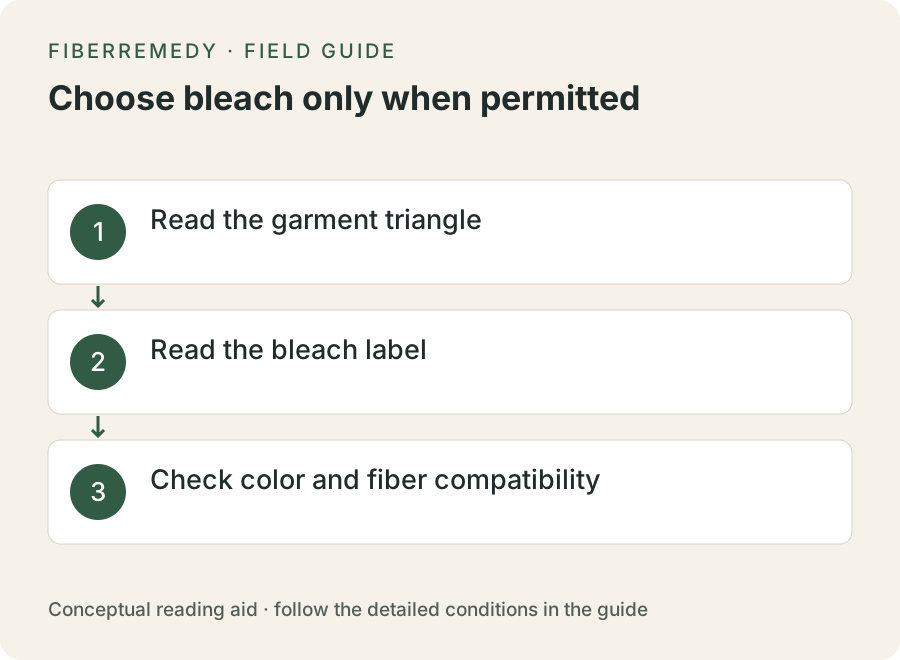
- Read the garment triangle
- Read the bleach label
- Check color and fiber compatibility
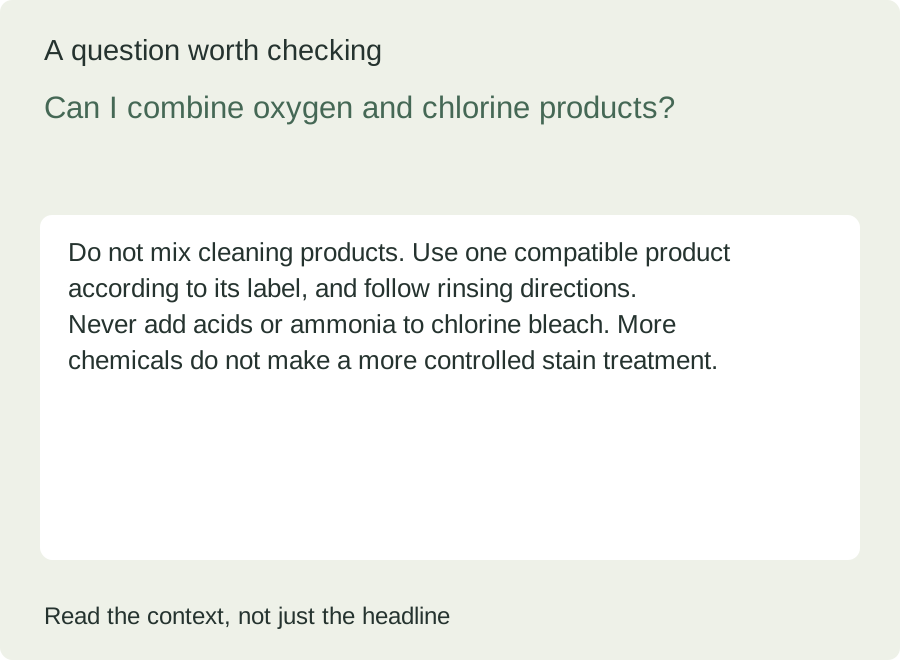
Can I combine oxygen and chlorine products?
Do not mix cleaning products. Use one compatible product according to its label, and follow rinsing directions. Never add acids or ammonia to chlorine bleach. More chemicals do not make a more controlled stain treatment.
For more context, see the topic FAQ and glossary. A reference value or example should be read with its units, assumptions and product-specific conditions.
Sources and scope
The references below were supplied with the original manuscript. A reference is not evidence that every numerical claim has been independently checked. See the source library and our verification status.
- Ullmann's Encyclopedia of Industrial Chemistry – Bleaching Agents in Laundry Detergents (Peroxygen Compounds and TAED)
- Textile Research Journal – Oxycellulose Formation and Tensile Strength Loss in Hypochlorite- vs. Peroxide-Bleached Cotton
- NIOSH / CDC Chemical Safety Card – Sodium Hypochlorite Incompatibilities (Acids and Ammonia)
Put the explanation to work
Continue reading
Spot a questionable claim or a calculation issue? Read our correction process and contact information. Examples and illustrations are educational; they do not establish product suitability or a laboratory result.