 FiberRemedy
Explainers
Why sorting laundry matters beyond lights and darks
Color is only one way a mixed load can go wrong.
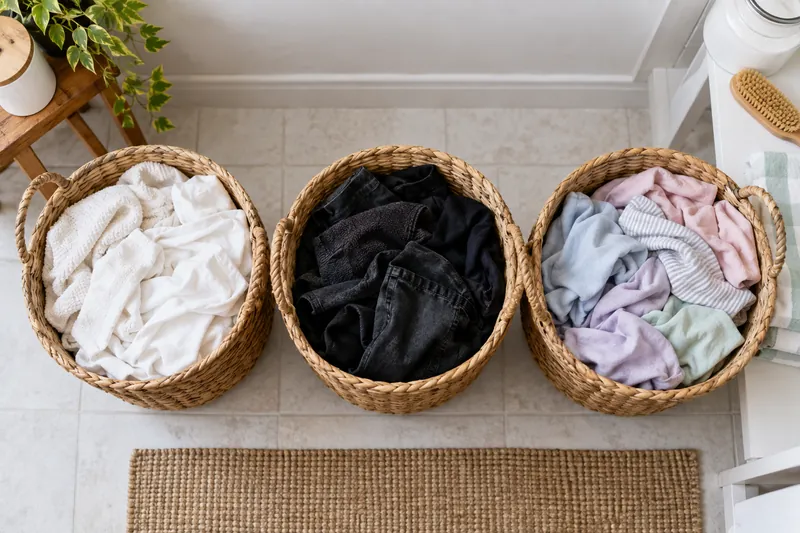
Before you start
Color is only one way a mixed load can go wrong. Weight, texture and care limits deserve a place in the sorting decision too.
Start with a shared care process
Look for the treatment the garments can safely share. If one item requires a different process, separate it even when its color matches. The narrowest care restriction is more useful than a visual match. Sort before measuring detergent so you know what the load actually contains.
Notice rough and delicate surfaces
A fine knit, an exposed zipper and a rough towel create different kinds of contact in a moving drum. Preparing closures and using a suitable mesh bag may help with particular items, but neither makes every combination appropriate. The simple question is whether these pieces should be moving together at all.

Think about water and drying
Items with very different thicknesses can finish at different times. Treating everything according to the slowest-drying item may overdo the rest. Separating by practical behavior helps you monitor the load. It also makes a small load of genuinely similar items easier to repeat when a result needs improvement.
Try sorting by the exception
Imagine a basket of similarly colored items containing one garment with a restrictive drying instruction and another with an exposed rough fastening. Sorting only by color hides both exceptions. Put the items with ordinary compatible care into one group and review the exceptions separately. This does not mean every exception requires its own machine load; it means you resolve its care process before it disappears among familiar clothes. The approach is easier to maintain than memorizing a complicated universal sorting chart because the decision is tied to the actual labels and construction in front of you.
Avoid turning sorting into a ritual
You do not need a separate wash for every shirt. Make a few useful groups based on actual labels, color-transfer concerns and wear. If your system is too complicated to maintain, simplify the groups without ignoring the restrictions. A note on the basket can be more useful than trying to remember every exception.

Practical check: what to observe
Start with the situation described in this article, then follow the applicable product instructions. Keep a short note of what you observe so a later decision has context.
- Group by care limits
- Check color and surface contact
- Separate incompatible items
Can a color-catching sheet replace sorting?
Do not treat an accessory as a guarantee against dye transfer or other damage. Follow its directions and keep garment-care restrictions in control.
For more context, see the topic FAQ and glossary. A reference value or example should be read with its units, assumptions and product-specific conditions.
Sources and scope
The reading below provides context for the relevant care or brewing principles. The article’s scenarios and decision questions are original editorial explanations, not independent product tests. Read the editorial policy for sourcing, AI assistance and corrections.
Put the explanation to work
Continue reading
Spot a questionable claim or a calculation issue? Read our correction process and contact information. Examples and illustrations are educational; they do not establish product suitability or a laboratory result.