 FiberRemedy
Explainers
Before washing a wool sweater: a setup checklist for the whole job
Plan the wash and drying space together, using Woolmark’s demonstration as a visual reference for compatible wool garments.

Before you start
Set up the drying stage before wetting the sweater. Woolmark’s video shows hand-washing and drying techniques, but your garment’s label determines whether that route is suitable. This checklist helps you prepare the equipment and transitions the video makes look easy.
The job starts before the water
A sweater takes up space both during washing and afterward. Before starting, check that you can complete the full process without leaving the wet item unsupported while you clear a table or search for towels.
The Woolmark sweater-care guide discusses washing methods according to the garment’s care claim. Use it alongside the label, not as a replacement for that label.
Watch the demonstration with a specific purpose
The Woolmark video demonstrates hand-washing and drying tips. Focus on how the garment is supported and moved, and how the workspace is arranged. Those visual details can be easier to understand on screen than in a brief written instruction.
The video does not establish compatibility for every sweater that looks similar. Check your garment’s instructions and product directions before copying a process.
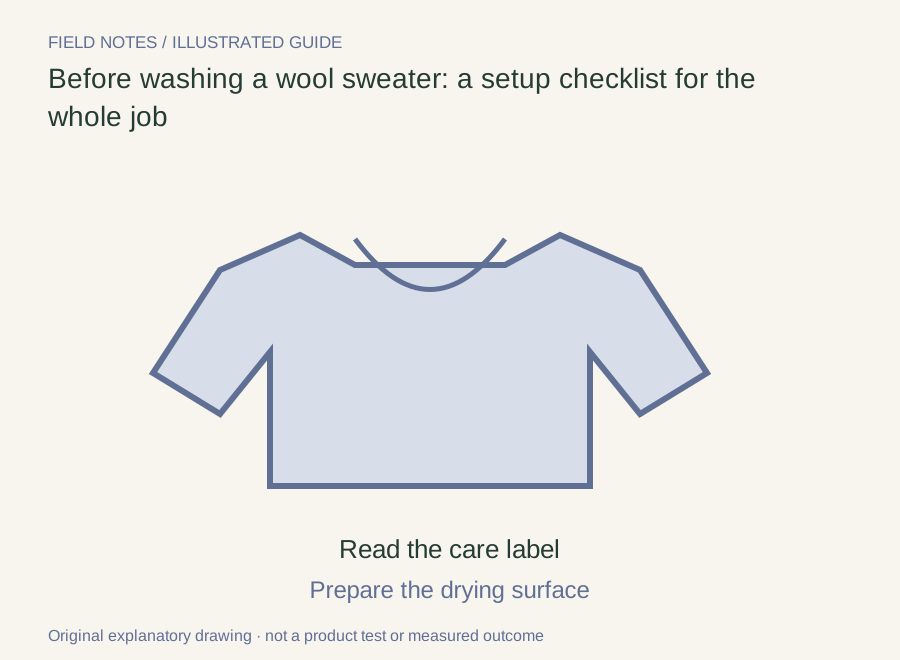
Prepare three stations
| Station | Have ready | Question to resolve first |
|---|---|---|
| Before washing | Care label, product directions, clean workspace | Is this washing method permitted? |
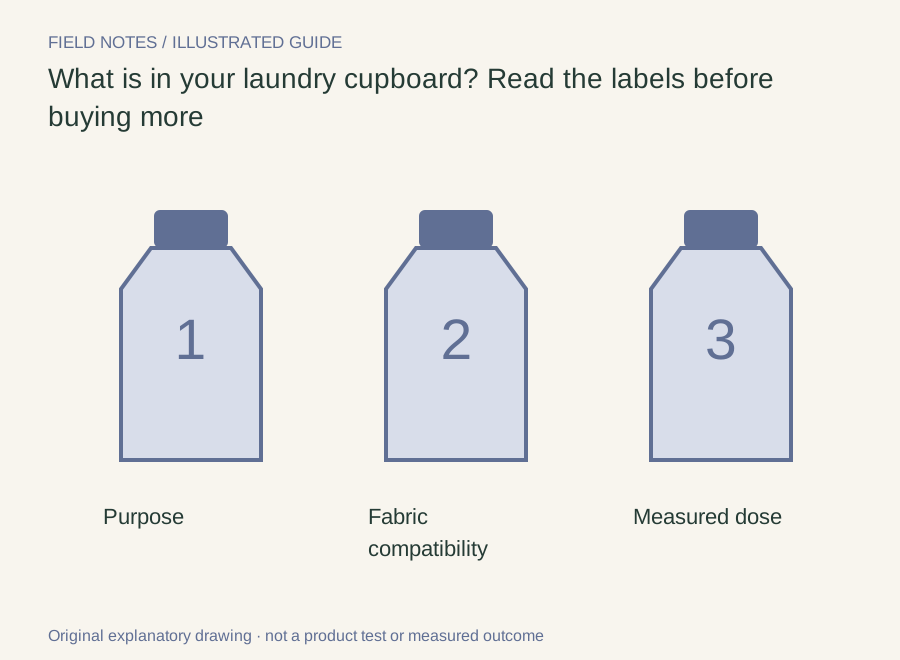
| During washing | Appropriate vessel and measured compatible product | What water conditions and handling are specified? |
| After washing | Clean towels or the prescribed drying setup | Can I support the garment without improvising? |
This is an organizational plan, not a new washing formula. It helps you carry out the method specified for the item without unnecessary interruptions.
Keep the garment’s shape visible
Before washing, look at the shoulders, body and sleeves laid naturally. A quick personal-reference photograph can help you remember their arrangement. Do not stretch the dry garment to obtain an idealized measurement or use the photograph as a promise that washing cannot change it.
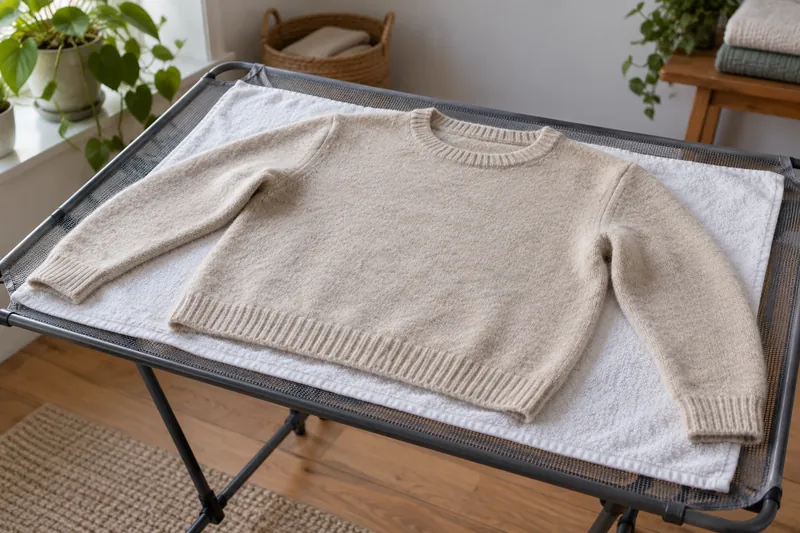
Woolmark advises flat drying for wool sweaters unless their care instructions permit another method. Our flat-versus-hang drying guide explains the practical difference in support. Check that the surface is clean and appropriate before placing a wet garment on it.
Avoid adding an unrelated stain experiment
If the sweater also has a visible stain, resolve that question before starting the general wash. Note what caused it and consult guidance specific to wool and the garment. A routine wash plan is not automatically a stain-removal plan.
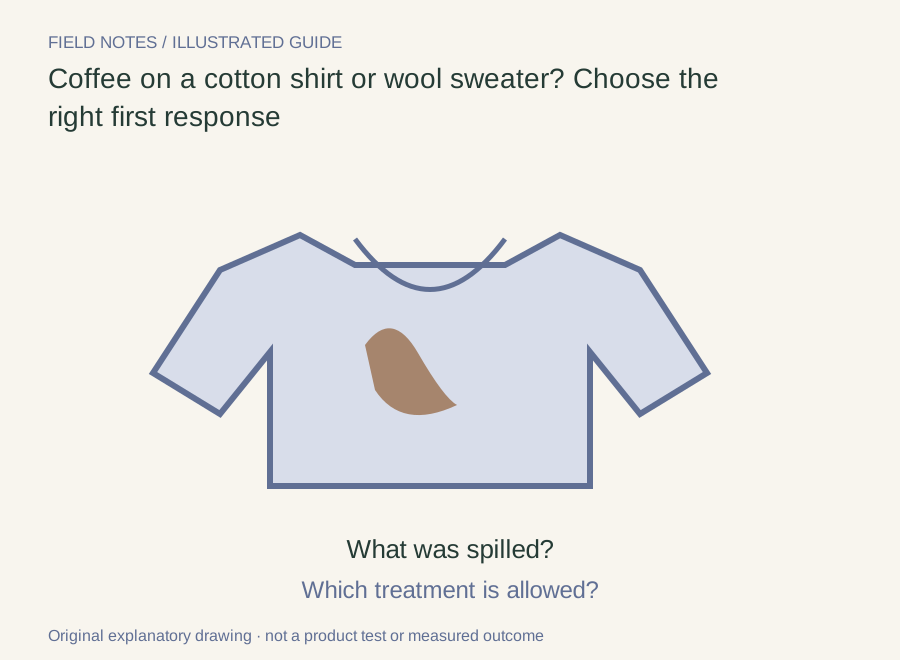
For a coffee spill, use our coffee-on-cotton-or-wool decision sheet. It helps identify which source to consult without blending several treatments.
Finish the record, not just the wash
After the garment has dried using its permitted method, note the products and process you used and any changes you observed. Store that note with a photograph of the care label. If another person handles the laundry next time, the instructions will not depend on remembering which video you watched.
A useful routine is one you can repeat calmly. Preparing the workspace often solves a more immediate problem than purchasing another special accessory.
Practical check: what to observe
Lay the dry garment flat and note its ordinary shape before starting. Prepare the permitted washing products and a clean drying surface so you do not have to invent a place for a wet sweater halfway through.
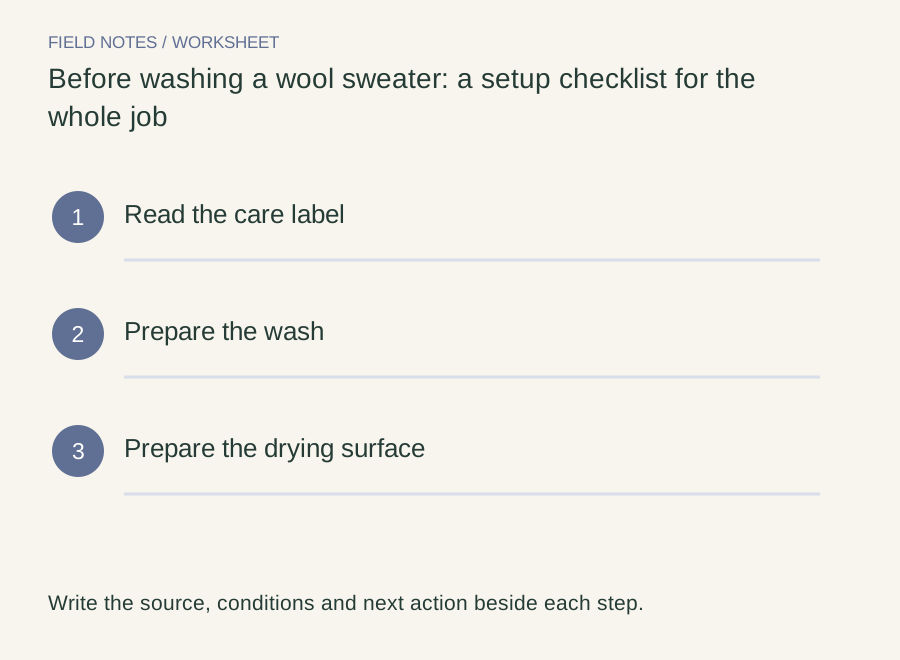
- Read the care label
- Prepare the wash
- Prepare the drying surface
Does every wool sweater need hand washing?
No. Care methods vary by garment. Some labels permit machine washing and others specify different care. Choose the route allowed for that item rather than assuming all wool has identical instructions.
For more context, see the topic FAQ and glossary. A reference value or example should be read with its units, assumptions and product-specific conditions.
Watch with context
Woolmark: washing and drying a wool sweater
From Woolmark. An external demonstration to accompany the explanation. Follow the instructions for your own equipment or garment; a video is not evidence for every claim on this page.
Player requested. If the player remains blank or reports an error, use the direct YouTube link below.
Loading the player connects to YouTube and may share your IP address and browser information. YouTube may process data and use storage under its own policies. Video privacy details.
If playback is unavailable, watch “Woolmark: washing and drying a wool sweater” on YouTube.
Sources and scope
The reading below provides context for the relevant care or brewing principles. The article’s scenarios and decision questions are original editorial explanations, not independent product tests. Read the editorial policy for sourcing, AI assistance and corrections.
- Woolmark — How to Wash a Wool Sweater
Choose the method permitted by the actual garment care label.
- Woolmark — Wool Sweater Washing and Drying Demonstration
External hand-washing and drying demonstration; not a claim that every wool garment is hand-washable.
- GINETEX — Care Labelling
Explains the scope of care instructions. Official symbol artwork is not reproduced here.
Put the explanation to work
Continue reading
Spot a questionable claim or a calculation issue? Read our correction process and contact information. Examples and illustrations are educational; they do not establish product suitability or a laboratory result.