 FiberRemedy
Explainers
Coffee on a cotton shirt or wool sweater? Choose the right first response
A coffee spill needs both a stain diagnosis and a garment check. Use this decision sheet before choosing a treatment.
Before you start
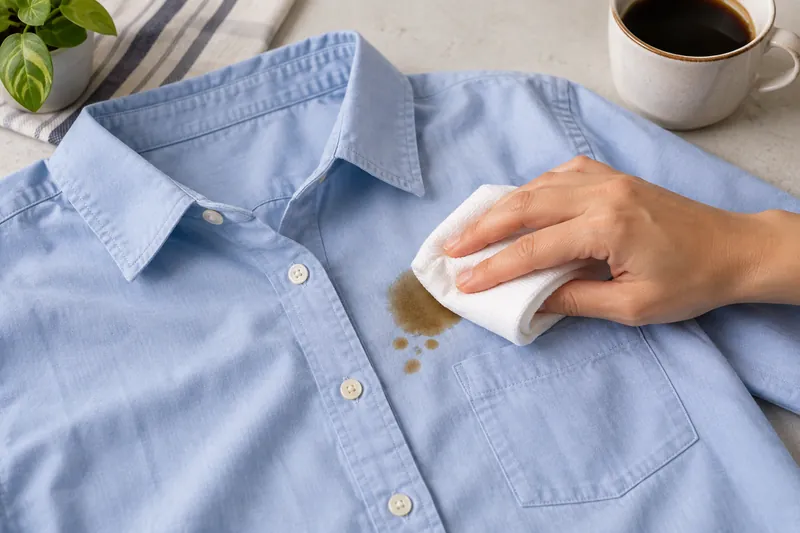
Check the garment and the drink before choosing a treatment. Black coffee and a milky drink are different spills, and a washable cotton shirt is not the same care problem as a wool sweater. A stain name alone cannot establish that a treatment is suitable.
Ask two questions before reaching for a bottle
What was in the cup, and what is the item made to tolerate? A black coffee spill, a latte and a sweetened drink do not leave identical residues. Meanwhile, an item described as cotton may include dye, lining, print or trim that restricts treatment.
Read the care instructions while the problem is still small. If the item requires professional cleaning, or its material and care method are unknown, avoid testing an improvised chemical sequence on the visible stain.
Match the source to the material
The American Cleaning Institute’s stain guide gives general guidance organized by stain. Woolmark’s stain page is more specifically concerned with wool and distinguishes black coffee from drinks containing milk.
Neither reference eliminates the need to check the actual garment and treatment product. A method intended for washable fabric should not automatically be transferred to a structured, lined or specially finished item.
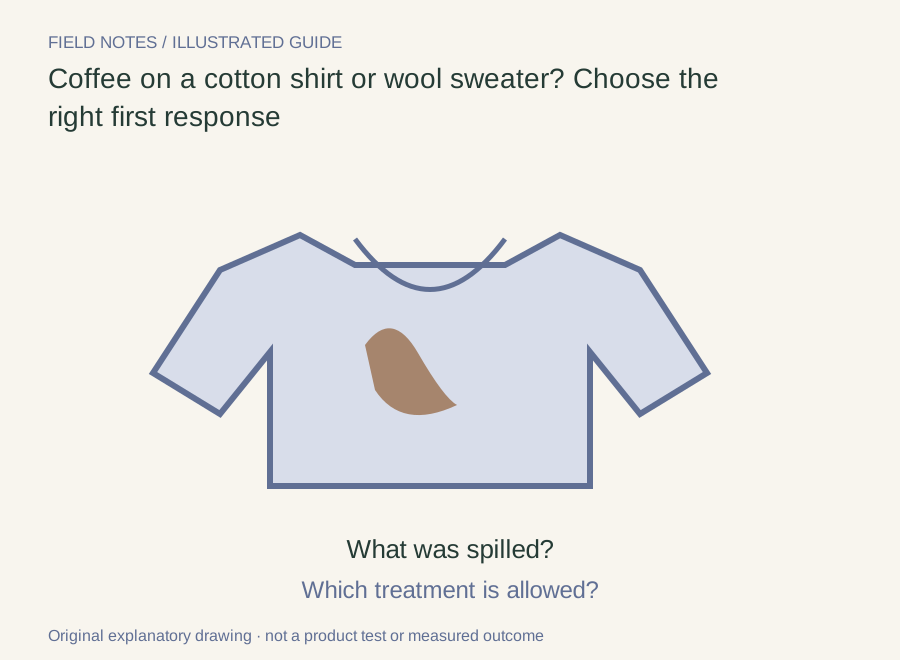
Use this first-response decision sheet
| What you know | Next useful action | Avoid assuming |
|---|---|---|
| Fresh spill on an identified washable item | Remove excess gently, then consult compatible treatment directions | That vigorous rubbing is necessary |
| Wool item with a readable care label | Use wool-specific guidance and a compatible product | That a cotton stain method applies |
| Drink contained milk or syrup | Record the ingredients when choosing guidance | That all coffee marks are the same |
| Old stain with previous treatments | List what has already been used | That another random product is a controlled next step |
| Valuable item with uncertain instructions | Consult the maker or a competent cleaner | That “natural” ingredients are automatically suitable |
This table is a triage aid, not a universal chemical recipe. It is intended to help you choose the appropriate next source.
Work within one compatible method
Woolmark recommends checking treatments on an inconspicuous area and handling the stain gently. ACI recommends following fabric care instructions and assessing the stain before machine drying. Those broad checkpoints are more portable than a particular solvent sequence.
Do not combine several online recipes in the hope that more products will work faster. If one approach fails, stop and reassess compatibility. Keep the product name and sequence in your notes; a cleaner may need that information later.
Inspect the whole affected area
Check the mark, any surrounding ring and changes in color or texture under similar lighting. A wet patch can look different from a dry one, so label your observations instead of declaring success from a quick photograph.
If the permitted method has been completed and a mark remains, decide whether to repeat it within the product instructions or seek help. Our delicate-clothes decision guide explains how to think about an item’s replaceability and construction.
Keep a record for the next spill
A short entry is enough: garment, drink, delay, product, method and result. It helps you avoid repeating an unsuitable treatment and makes a successful routine easier to recognize. The record describes your particular item; it does not prove that the same method works for every fabric.
Practical check: what to observe
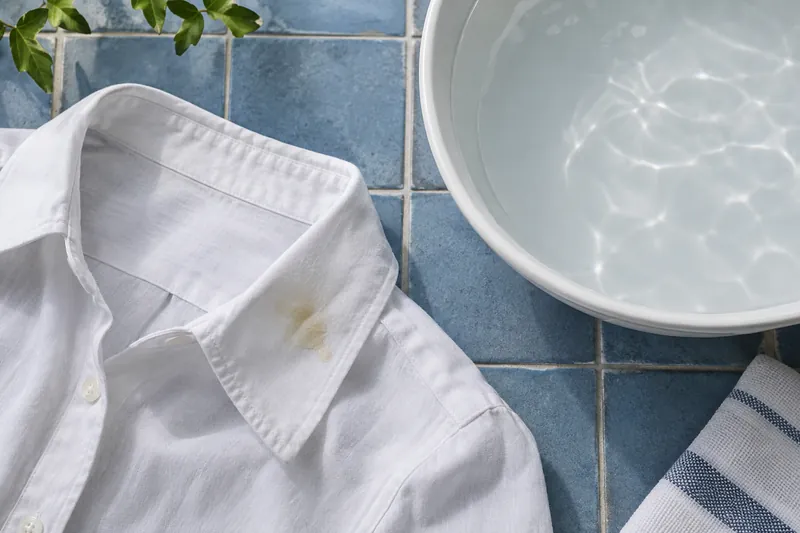
Record when the spill happened, what was in the drink and anything already applied. If you seek professional cleaning, pass on that record rather than describing every brown mark simply as coffee.
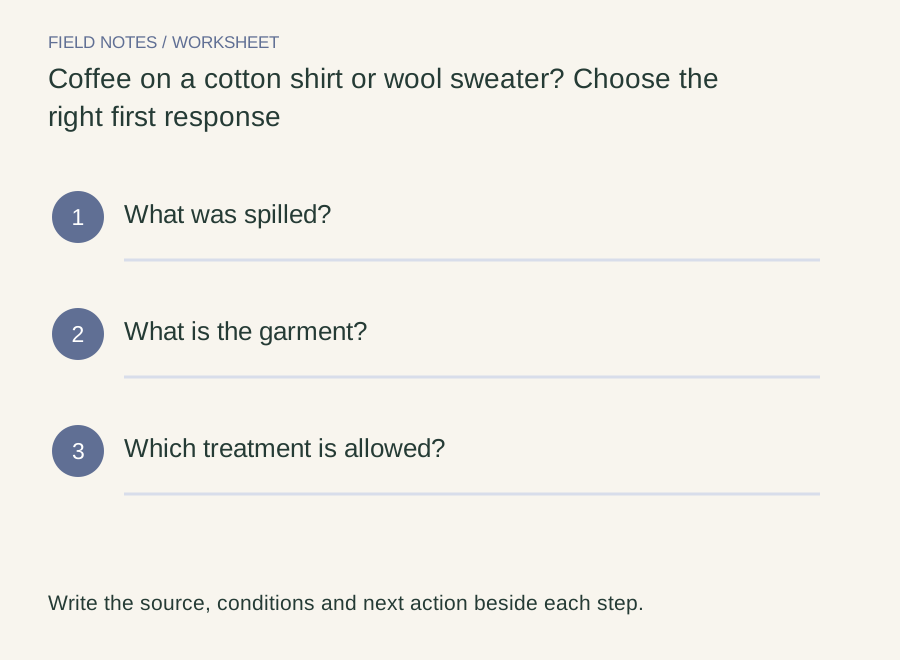
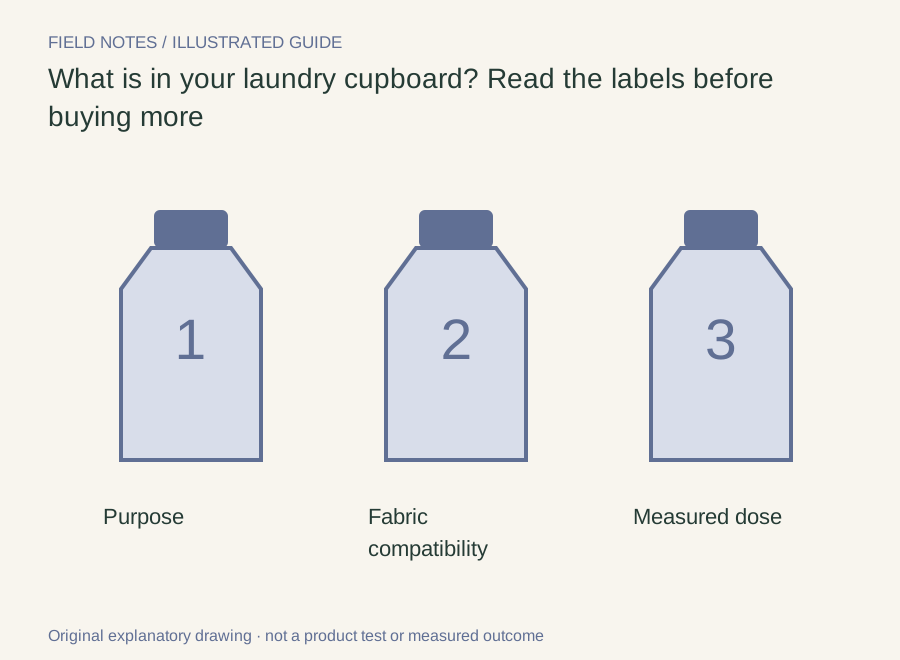
- What was spilled?
- What is the garment?
- Which treatment is allowed?
Should I dry the garment to see whether the stain disappeared?
Inspect after washing before using a dryer. ACI advises keeping a stained garment out of the dryer until the stain is removed. Use only the drying method permitted by the garment label.
For more context, see the topic FAQ and glossary. A reference value or example should be read with its units, assumptions and product-specific conditions.
See also: the stain × fiber care matrix indexes related stain guides and the interactive lookup tool.
Sources and scope
The reading below provides context for the relevant care or brewing principles. The article’s scenarios and decision questions are original editorial explanations, not independent product tests. Read the editorial policy for sourcing, AI assistance and corrections.
- American Cleaning Institute — Stain Removal Guide
General stain guidance; garment and treatment-product instructions still apply.
- Woolmark — Removing Stains from Wool
Wool-specific care reference; our article does not reproduce solvent-treatment recipes.
- GINETEX — Care Labelling
Explains the scope of care instructions. Official symbol artwork is not reproduced here.
Put the explanation to work
Continue reading
Spot a questionable claim or a calculation issue? Read our correction process and contact information. Examples and illustrations are educational; they do not establish product suitability or a laboratory result.