 FiberRemedy
Explainers
Why delicate clothes need a plan, not a stronger product
Delicate care is often about controlling the process.
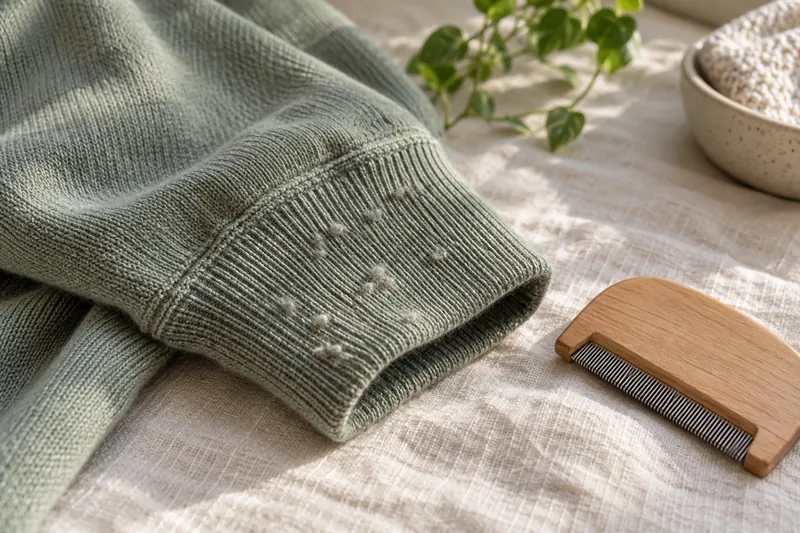
Before you start
Delicate care is often about controlling the process. The right first question is what the garment permits, not which bottle sounds most powerful.
Identify the vulnerable parts
Read the label and inspect the garment’s construction. The fiber is only part of the item: trims, lining, closures and shape can affect the care process. Do not assume the least visible component is the least important. If you cannot identify the finish or construction, ask before experimenting.
Choose the process before the product
Establish whether the garment permits the intended cleaning method. Then choose a product appropriate to that process and follow its directions. Reversing this order can lead to using a product because it is already on the shelf, even though the garment needs a different approach.
Plan handling while wet
Think about lifting, support, drying space and any reshaping directions before starting. A carefully washed item can still receive unsuitable handling afterward. Prepare the clean surface or drying arrangement in advance so you do not improvise while holding a wet garment over the sink.
A care plan includes the exit route
Before beginning a permitted cleaning process, identify where the item will go next and how it will be supported. Also decide what you will do if you discover an unreadable label or an unexpected change. Having an exit route can prevent the common impulse to keep adding treatment because the garment is already wet. For an item with significant personal value, clarification before starting may be the most economical choice. The relevant cost is not only a cleaning product or service fee; it includes the possibility of losing the qualities that make the garment worth keeping.
Set a stopping point
Decide what change would make you stop: color transfer, unexpected texture or uncertainty about a treatment. This is especially useful for sentimental or difficult-to-replace items. A professional assessment can be the proportionate next step when the cost of experimentation is higher than the value of finishing immediately.

Practical check: what to observe
Start with the situation described in this article, then follow the applicable product instructions. Keep a short note of what you observe so a later decision has context.
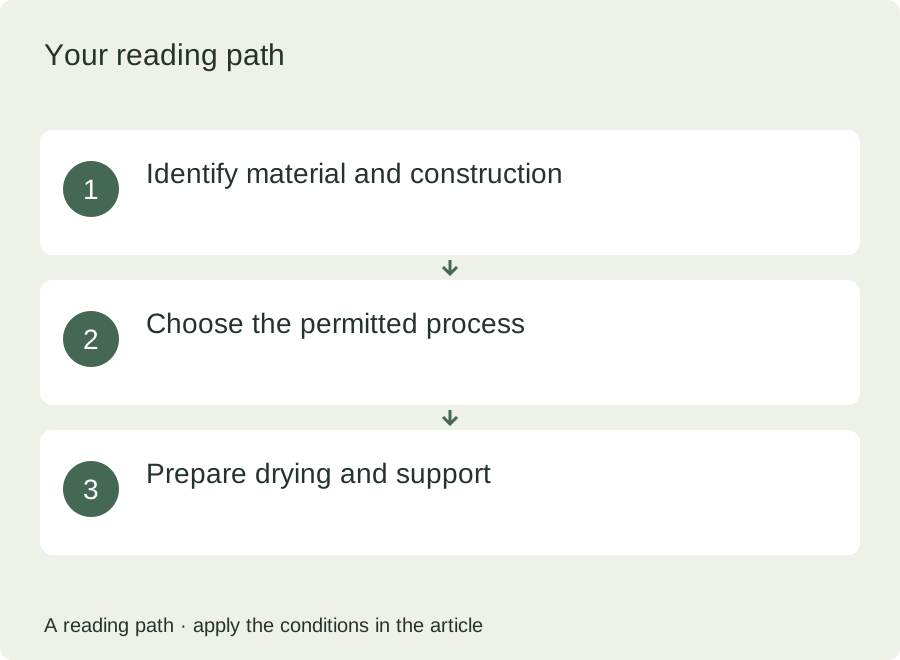
- Identify material and construction
- Choose the permitted process
- Prepare drying and support
Does hand washing mean rubbing the stain harder?
No. Hand washing is a method with its own care instructions. More rubbing is not a substitute for a compatible stain treatment and can be unsuitable for a delicate surface.
For more context, see the topic FAQ and glossary. A reference value or example should be read with its units, assumptions and product-specific conditions.
Watch with context
How to Machine Wash a Wool Sweater
From Woolmark. An external demonstration to accompany the explanation. Follow the instructions for your own equipment or garment; a video is not evidence for every claim on this page.
Player requested. If the player remains blank or reports an error, use the direct YouTube link below.
Loading the player connects to YouTube and may share your IP address and browser information. YouTube may process data and use storage under its own policies. Video privacy details.
If playback is unavailable, watch “How to Machine Wash a Wool Sweater” on YouTube.
Sources and scope
The reading below provides context for the relevant care or brewing principles. The article’s scenarios and decision questions are original editorial explanations, not independent product tests. Read the editorial policy for sourcing, AI assistance and corrections.
Put the explanation to work
Continue reading

Spot a questionable claim or a calculation issue? Read our correction process and contact information. Examples and illustrations are educational; they do not establish product suitability or a laboratory result.