 FiberRemedy
Explainers
A stain just happened. What should you do first?
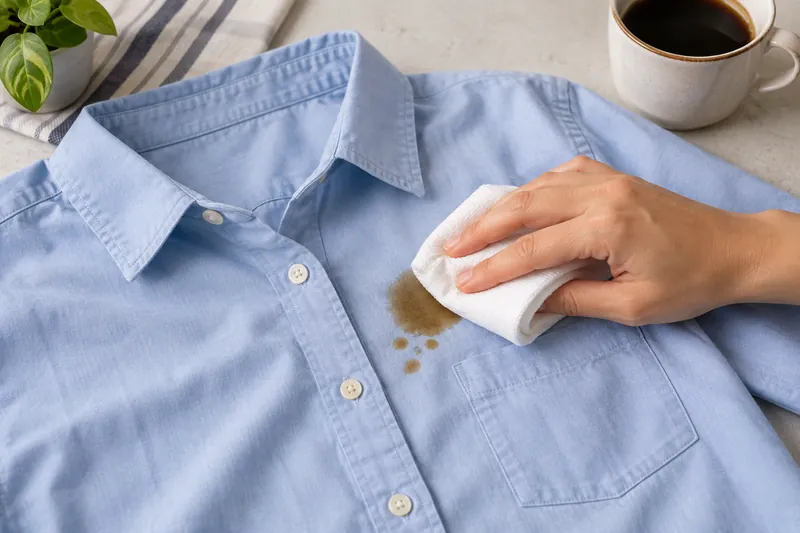
The first useful move is to identify the fabric and the spill.
Before you start
The first useful move is to identify the fabric and the spill. Rushing to the strongest product can create a second problem.
Pause long enough to identify the item
Check the care label, fiber information and any special finish or trim. If the item is valuable, unfamiliar or restricted to professional cleaning, that changes the next step. Note what spilled and when. A cleaner can make better decisions with that information than with a vague description of a mysterious mark.
Separate removal from experimentation
Use a treatment intended for the identified stain and permitted by the garment and product instructions. Check the product’s testing directions before treating a visible area. Do not combine products because the first attempt seems slow. More ingredients introduce interactions and make it harder to know what caused a color or texture change.
Check before the next stage
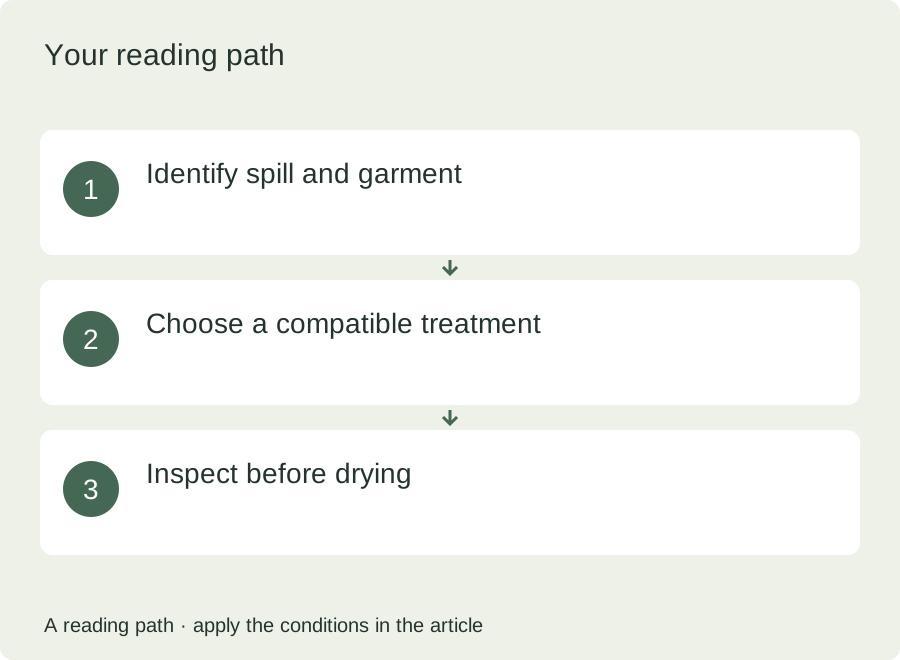
Inspect the treated area before moving on to a drying or finishing process. Follow the stain-removal guidance for that stain rather than assuming a mark will disappear in the dryer. A shadow can be remaining material, a color change or a difference in the fabric; these are not all solved by more detergent.
A useful note for professional help
A clear account might say: coffee with milk spilled on the front panel this morning; the garment label permits a particular care process; one named product was applied according to its directions; the area now looks lighter. That is much more useful than I tried everything. Include what actually happened without guessing the chemistry. Keep the garment and product information available when asking for advice. This record can prevent a later helper from repeating a treatment or assuming the mark is untouched. It also reminds you when the problem changed from remaining spill to a possible fabric or color change.
Keep a short treatment record
Write down the spill, the products used and the result. If you seek professional help, share that history. Repeatedly cycling through internet remedies without keeping track can obscure the original problem. Stop when the fabric changes, the instructions no longer fit or the consequence of another experiment feels too high.
Practical check: what to observe
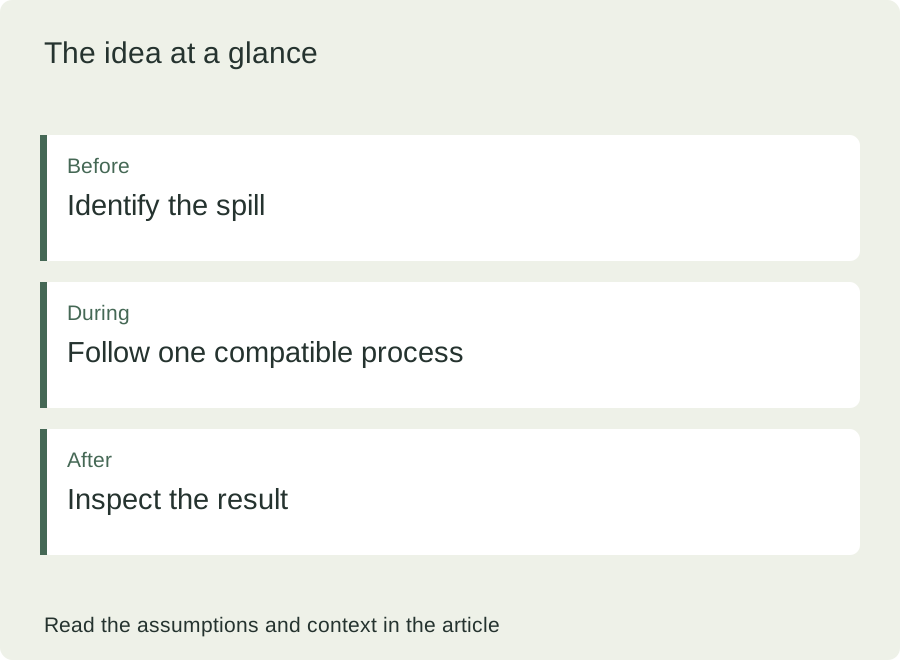
Start with the situation described in this article, then follow the applicable product instructions. Keep a short note of what you observe so a later decision has context.
- Identify spill and garment
- Choose a compatible treatment
- Inspect before drying
Should I use one universal stain mixture?
No. Treatments depend on the stain, garment construction and product directions. A universal recipe can be unsuitable for the material or the chemicals already present.
For more context, see the topic FAQ and glossary. A reference value or example should be read with its units, assumptions and product-specific conditions.
Sources and scope
The reading below provides context for the relevant care or brewing principles. The article’s scenarios and decision questions are original editorial explanations, not independent product tests. Read the editorial policy for sourcing, AI assistance and corrections.
Put the explanation to work
Continue reading
Spot a questionable claim or a calculation issue? Read our correction process and contact information. Examples and illustrations are educational; they do not establish product suitability or a laboratory result.