 FiberRemedy
Explainers
Why a mesh laundry bag helps—and what it cannot do
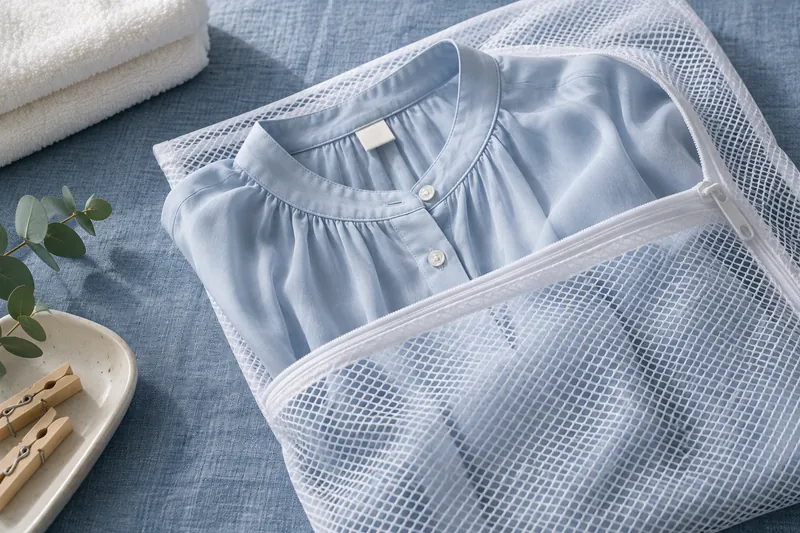
A mesh bag can organize suitable small or delicate items.
Before you start
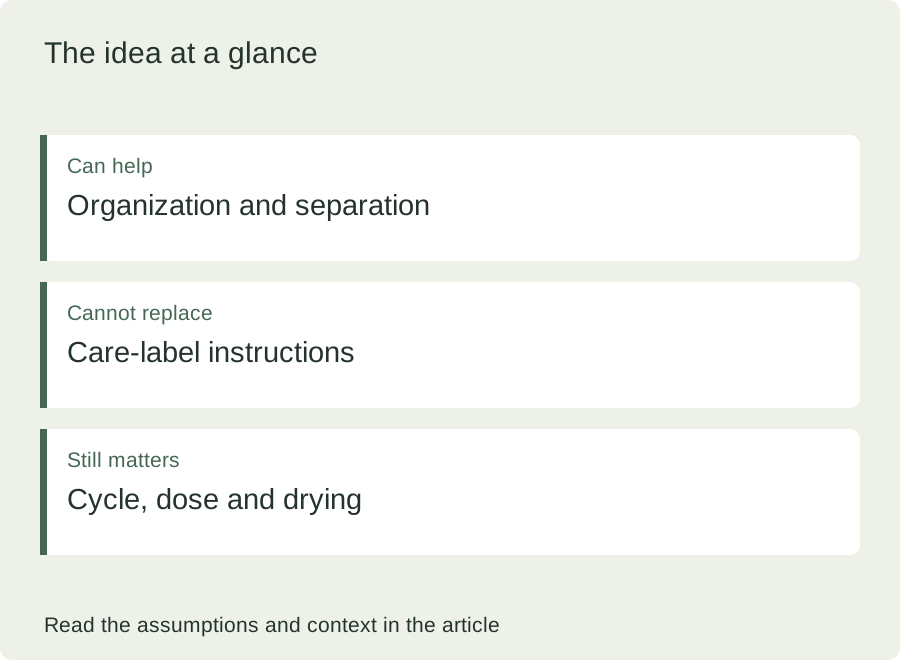
A mesh bag can organize suitable small or delicate items. It does not change the care label or turn an unsuitable machine cycle into a safe one.
Give the bag a specific job
Decide whether you are trying to keep small items together, reduce snagging contact or separate an appropriate delicate piece. Choose a bag intended for that job and follow its instructions. A bag that is overfilled or poorly closed may not provide the handling you expected.
Keep garment limits in control
Water temperature, detergent compatibility and permitted agitation still matter. If a garment should not be machine washed, putting it in a bag does not grant permission. Treat the bag as an accessory within a suitable process. It is not a replacement for reading the washing and drying symbols.
Prepare what goes inside
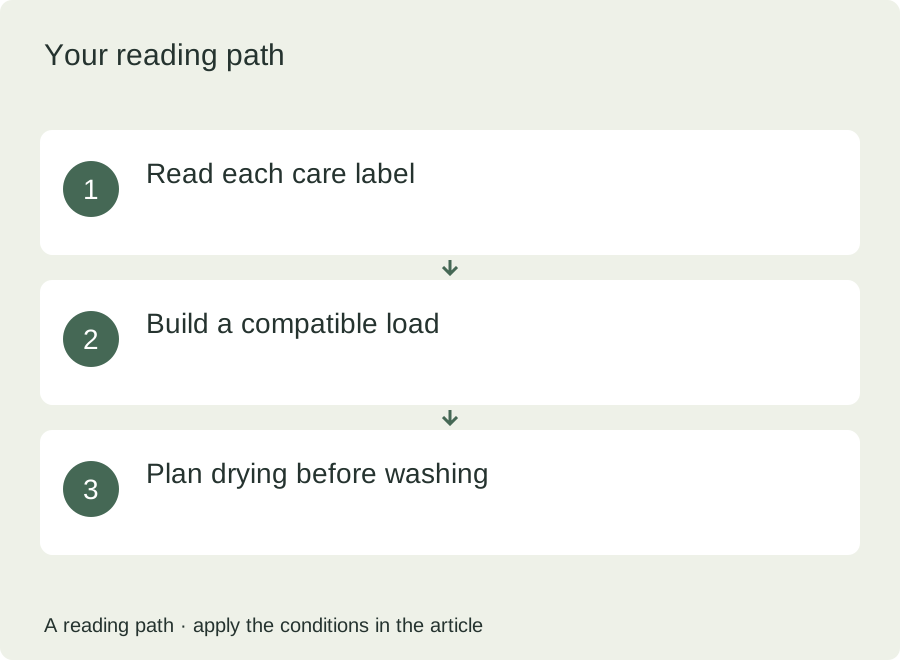
Check pockets and closures, and consider whether hard or sharp details might contact another item through the mesh. Do not group incompatible colors or textiles just because they fit in the same pouch. Leave the room required by the bag instructions instead of packing it like a travel organizer.
Match the accessory to one problem
Suppose socks are disappearing into larger garments while a separate delicate item is snagging. These are different problems, even though a mesh bag might be relevant to each. For the socks, organization may be the main aim. For the delicate item, the permitted machine process and contact with closures deserve closer attention. Do not combine them automatically in one pouch. Name the problem, confirm the item can use the planned process and follow the bag’s loading directions. Afterward, check whether the particular problem improved rather than treating possession of a bag as proof of correct care.
Review the outcome
After washing, look for missed soil, tangling and any change in surface or shape. If results are poor, revisit load size, program and whether the item belongs in a machine at all. Avoid solving every problem by buying a finer bag. The care process needs to make sense before the accessory can help.
Practical check: what to observe
Start with the situation described in this article, then follow the applicable product instructions. Keep a short note of what you observe so a later decision has context.
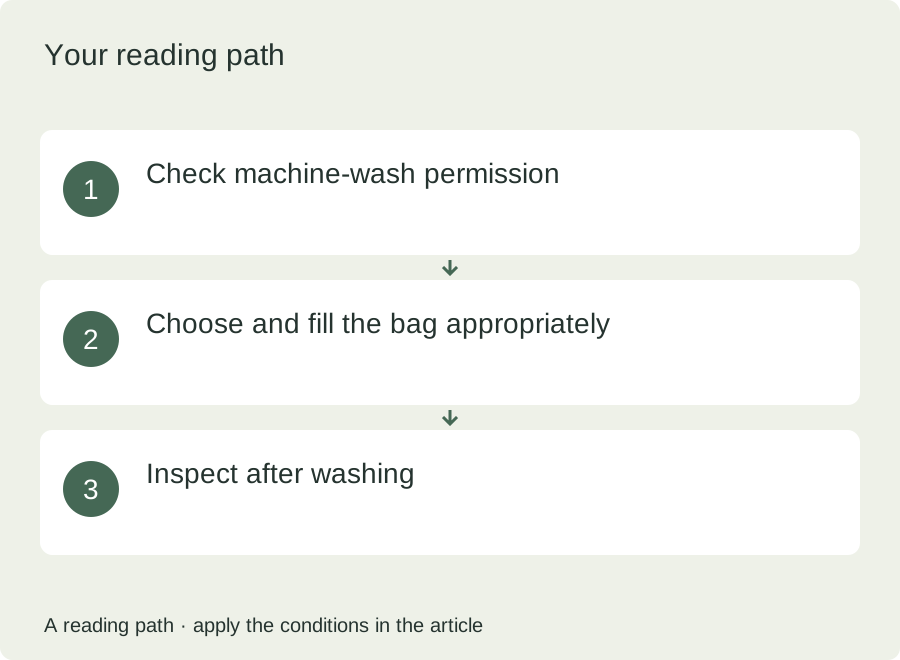
- Check machine-wash permission
- Choose and fill the bag appropriately
- Inspect after washing
Can I put all delicate clothes in one large bag?
Only if their care needs are compatible and the bag is used as directed. Similar appearance does not establish compatible colors, closures or washing limits.
For more context, see the topic FAQ and glossary. A reference value or example should be read with its units, assumptions and product-specific conditions.
Sources and scope
The reading below provides context for the relevant care or brewing principles. The article’s scenarios and decision questions are original editorial explanations, not independent product tests. Read the editorial policy for sourcing, AI assistance and corrections.
Put the explanation to work
Continue reading

Spot a questionable claim or a calculation issue? Read our correction process and contact information. Examples and illustrations are educational; they do not establish product suitability or a laboratory result.