 FiberRemedy
Explainers
Laundry for beginners: what actually changes the result
A successful wash starts before the machine runs.
Before you start
A successful wash starts before the machine runs. The label, the load and the product directions give you a better starting point than a universal favorite cycle.
Read the garment before the machine
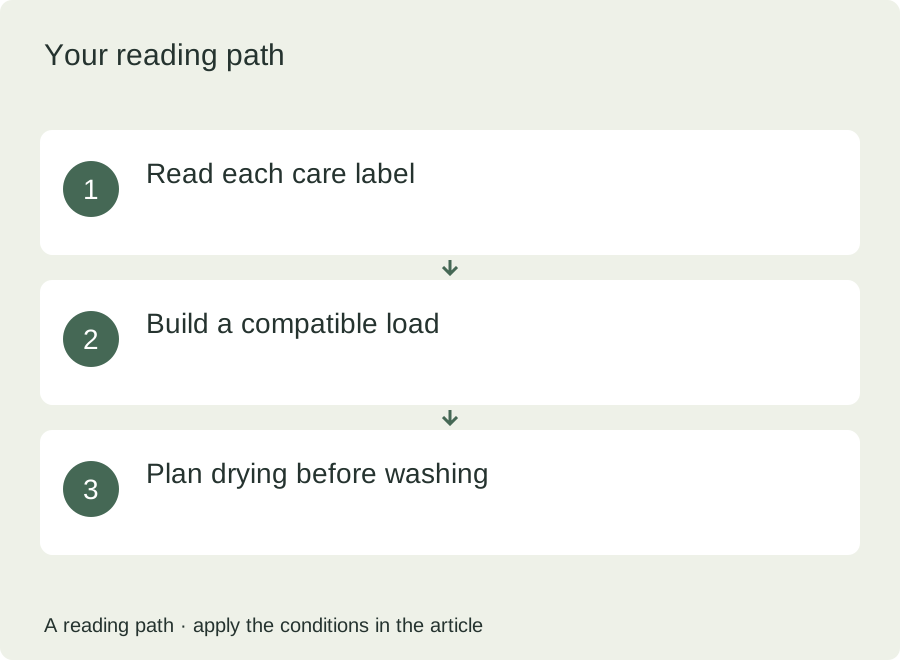
Find the care label and identify any restrictions on washing, bleach, drying and ironing. Fiber content is useful context, but it does not describe every dye, trim or construction detail. Two cotton garments can need different handling. If a symbol is unfamiliar, use the care-symbol decoder before selecting a program.
Build a compatible load
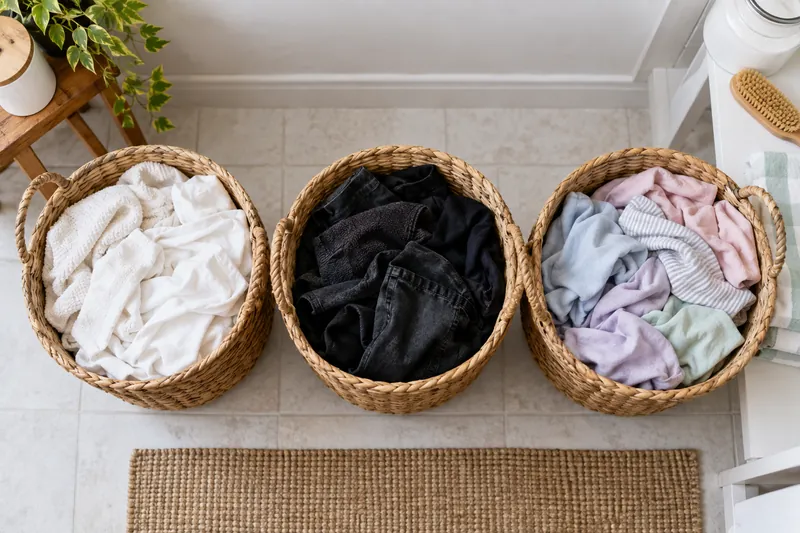
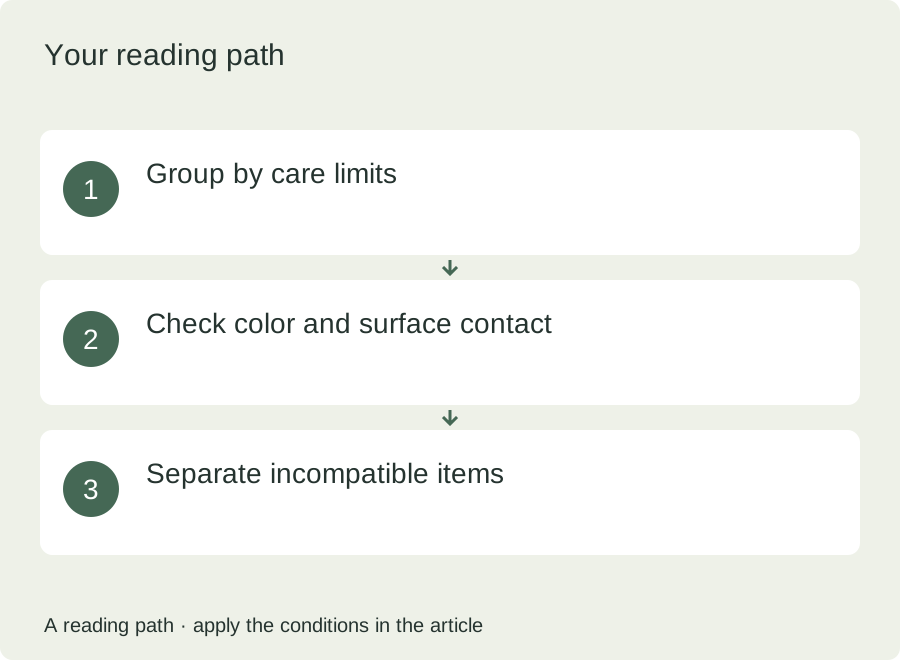
Separate items that cannot share the same treatment. Consider color transfer, lint, weight and the permitted wash process, not only whether the basket is full. A heavy towel and a delicate blouse may both tolerate water while still being poor companions. Prepare fasteners and pockets according to the garment instructions.
Measure instead of guessing
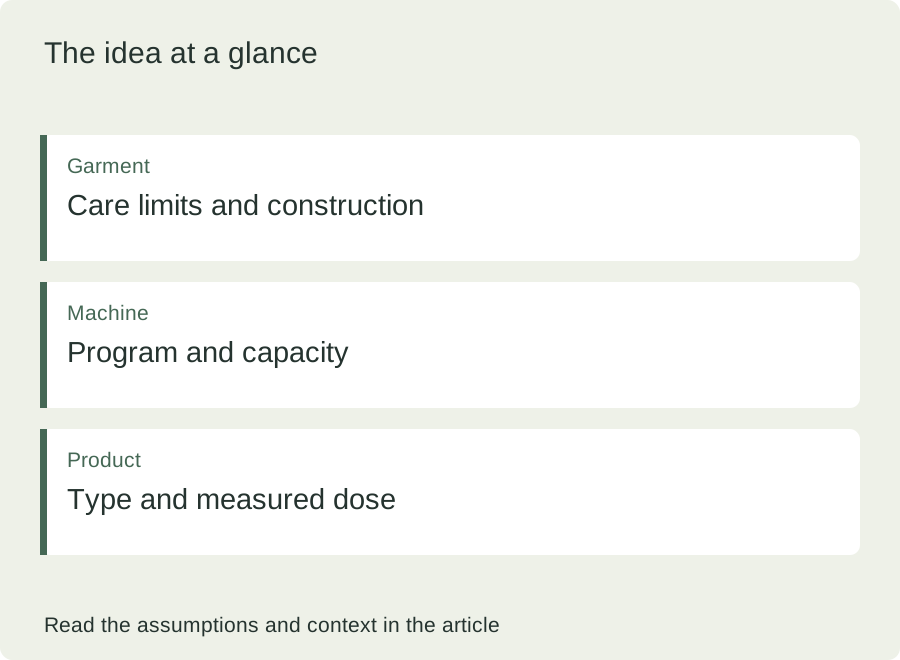
Read the detergent directions for your machine and load. Concentrations differ, so a cap from one product is not a unit for another. Note which dose you used when investigating a problem. Increasing the quantity automatically can make troubleshooting harder because the original issue might be loading, rinsing or the wrong treatment.
Build a first-load worksheet
For a familiar group of everyday garments, write four lines: compatible care instructions, chosen program, detergent dose from the product directions and planned drying method. Keep any uncertain item out until its instructions are clear. After the load finishes, note one result worth remembering, such as a garment needing more drying space than expected. This simple worksheet is not intended to become permanent administration. It helps you identify the decisions that matter so future loads become easier. It also gives another household member enough context to continue the routine without guessing what your usual settings mean.
Plan the finish first
Check drying instructions before starting the wash. Make room for anything that needs flat drying and allow enough time before you need to wear it. A last-minute decision to use a hotter dryer can undo careful washing. Put items away only when appropriately dry, and investigate persistent odors rather than masking them.
Practical check: what to observe
Start with the situation described in this article, then follow the applicable product instructions. Keep a short note of what you observe so a later decision has context.
- Read each care label
- Build a compatible load
- Plan drying before washing
Is the delicate cycle safe for everything?
No. A gentle program cannot override a do-not-wash instruction, unsuitable temperature or a garment that needs professional handling.
For more context, see the topic FAQ and glossary. A reference value or example should be read with its units, assumptions and product-specific conditions.
Sources and scope
The reading below provides context for the relevant care or brewing principles. The article’s scenarios and decision questions are original editorial explanations, not independent product tests. Read the editorial policy for sourcing, AI assistance and corrections.
Put the explanation to work
Continue reading
Spot a questionable claim or a calculation issue? Read our correction process and contact information. Examples and illustrations are educational; they do not establish product suitability or a laboratory result.