 FiberRemedy
Bleaching & Water Chemistry
Hard water and laundry residue
A stiff towel does not prove that hard water is the cause.
Before you start
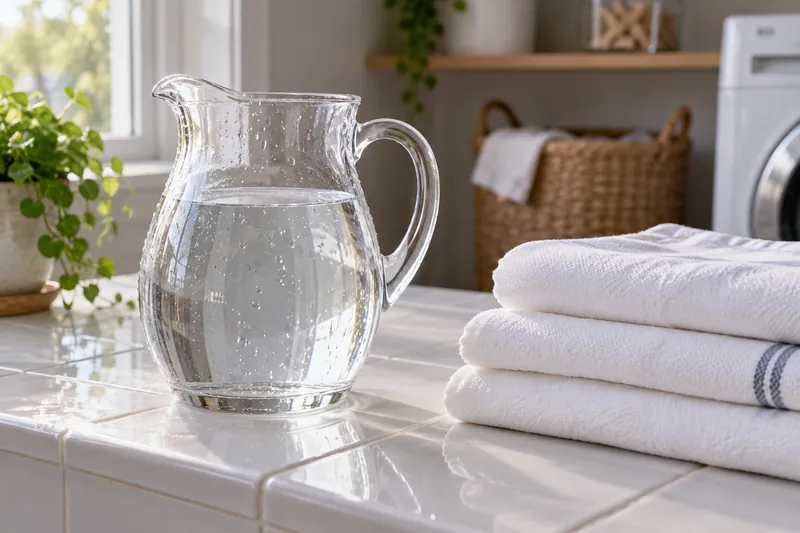
A stiff towel does not prove that hard water is the cause. Overdosing, overloaded washing and fabric softener can also leave an unpleasant feel. Begin with a local water report or a suitable hardness test and compare its units with those on the detergent label.
How Divalent Cations Disable Anionic Detergents
Municipal and well water supplies that pass through limestone, dolomite, or gypsum aquifers dissolve substantial quantities of calcium (Ca^{2+) and magnesium (Mg^{2+) ions. Hydrologists and the United States Geological Survey (USGS) express total water hardness as milligrams per liter (mg/L, equivalent to parts per million, ppm) of calcium carbonate (CaCO₃), or in North American plumbing conventions as grains per gallon (gpg), where 1 gpg = 17.1 mg/L CaCO₃.
When hard water enters a washing machine drum, these positively charged divalent cations immediately attack two targets: anionic surfactants in your detergent and negatively charged soil/fiber surfaces.
1. Surfactant Precipitation (Lime Soap Curd)
Every conventional laundry detergent relies on anionic surfactants—such as linear alkylbenzene sulfonate (LAS) or sodium lauryl ether sulfate (SLES)—or traditional carboxylate soaps (such as sodium cocoate or sodium tallowate in “natural” homemade laundry powders). In solution, the hydrophilic head of an anionic surfactant carries a single negative charge (-SO₃⁻ or -COO⁻).
When a divalent Ca^{2+ or Mg^{2+ ion encounters two anionic surfactant chains, it bridges them electrostatically:
2 R-COO⁻Na⁺ + Ca^{2+ → (R-COO)₂Ca↓ + 2 Na⁺
For true carboxylate soaps, the resulting calcium distearate or calcium dioleate has an extraordinarily low solubility product (K_{sp ≈ 10^{-12), precipitating instantaneously out of the wash water as a sticky, hydrophobic white-gray grease known as lime soap curd. While synthetic sulfonates (LAS) and ethoxylated sulfates (SLES) tolerate moderate hardness better than carboxylate soaps, high concentrations of Ca^{2+ (>150 mg/L) still force LAS molecules out of active micelle formation and into insoluble calcium-surfactant complexes. Every gram of surfactant bound by calcium is removed from soil emulsification before it ever touches your clothing.
2. Cation Bridging of Soil to Cotton
Cellulose (cotton, linen, rayon) carries a slight negative surface charge (zeta potential ≈ -15 to -25 mV) when immersed in neutral or alkaline water. Particulate dirt, clay, soot, and oxidized sebum also carry net negative surface charges. In soft water, like charges repel, helping lifted soil stay suspended in the wash liquor until it drains.
In hard water, divalent Ca^{2+ ions act as electrostatic staples (cation bridges): one positive charge binds to a negatively charged carboxylate site on the cotton fiber, while the second positive charge binds to a negatively charged clay or soot particle in the wash water. During the rinse cycle—when fresh hard water floods the drum after detergent builders have been drained—suspended dirt and residual surfactant precipitate onto the fabric all at once. Over 10 to 20 wash cycles, white cotton shirts turn progressively dull gray, and terry bath towels become stiff, scratchy, and non-absorbent.
The Three Classes of Water Builders: Precipitating, Ion-Exchange, and Chelating
To prevent Ca^{2+ and Mg^{2+ from deactivating surfactants, detergent formulators add builders. Following environmental restrictions on phosphates (STPP), residential detergents rely on three builder mechanisms:
| Builder Compound | Chemical Formula | 1% Solution pH | Mechanism vs Ca^{2+ / Mg^{2+ |
Safe on Wool / Silk? | Precipitate Residue Risk |
|---|---|---|---|---|---|
| Trisodium Citrate Dihydrate | Na₃C₆H₅O₇ · 2H₂O |
7.8–8.4 |
Soluble Chelation (tridentate complex) | Yes | None (100% water-soluble complex) |
| Sodium Tetraborate (Borax) | Na₂B₄O₇ · 10H₂O |
9.2–9.3 |
pH Buffering + Weak Hydroxyl Complexation | No (alkali scale damage) | Low (dissolves well above 30 °C) |
| Sodium Carbonate (Washing Soda) | Na₂CO₃ |
11.3–11.6 |
Insoluble Precipitation (CaCO₃↓ chalk) |
Never (severe hydrolysis) | High (leaves chalk dust in dark fabrics) |
| Zeolite A (Powder Detergents) | Na_{12[(AlO₂)_{12(SiO₂)_{12] |
10.0–10.5 |
Solid-State Ion Exchange (swaps Na⁺ for Ca^{2+) |
No (insoluble grit abrades wool) | High if overdosed or cold-washed |
Why Washing Soda (Na₂CO₃) Causes Chalky Dark Clothes
Many DIY laundry recipes recommend adding washing soda (sodium carbonate, Na₂CO₃) to soften hard water. While sodium carbonate does remove free Ca^{2+ ions from solution, it does not chelate them into a soluble complex. Instead, it softens water by precipitation:
Ca^{2+(aq) + CO₃^{2-(aq) → CaCO₃(s)↓
Calcium carbonate is literal limestone chalk. When precipitated inside a low-water High-Efficiency (HE) front-loading drum without polymeric anti-redeposition agents (such as sodium polyacrylate), microscopic CaCO₃ crystals lodge directly inside the weave of dark cotton t-shirts, denim, and activewear, leaving white streaks and a harsh, papery hand feel. Furthermore, sodium carbonate does not effectively precipitate magnesium (Mg^{2+) below pH 10.5, leaving magnesium hardness active in the wash bath.
Sodium Citrate: The Soluble Chelator for Every Wash Load
Trisodium citrate dihydrate (Na₃C₆H₅O₇ · 2H₂O, the tribasic sodium salt of citric acid) is the gold-standard soluble chelating agent for domestic hard-water remediation. Each citrate anion possesses three carboxylate groups (-COO⁻) and one central hydroxyl group (-OH) arranged in a geometry that wraps around a divalent Ca^{2+ or Mg^{2+ cation like a claw (chelation), forming a stable, electrically neutral or negatively charged water-soluble complex (log K_{Ca-Citrate ≈ 3.5–4.68).
Because the calcium-citrate complex remains 100% dissolved in water, it drains cleanly out of the machine at the end of the wash cycle without depositing chalk or zeolite grit onto fabrics or heating elements. Equally important, a 1\% solution of trisodium citrate has a nearly neutral pH of 7.8–8.4, making it the only water softener you can safely add to wool, cashmere, silk, and dark reactive-dyed cotton loads.
How to Make or Dose Sodium Citrate in Your Laundry
- Using Pure Culinary/Technical Trisodium Citrate Powder: Add
15 g(1 level tablespoon) directly into the main wash drum or detergent dispenser for moderately hard water (120–180 mg/L), or25 g(1.5–2 tablespoons) for very hard water (>180 mg/L).
Borax (Sodium Tetraborate): Alkaline Buffering and Magnesium Control
Borax (sodium tetraborate decahydrate, Na₂B₄O₇ · 10H₂O) performs a distinct, complementary role in hard-water cotton and linen laundering:
- Alkaline pH Buffering (
pH 9.2): Dissolving borax in water yields an equilibrium buffer of boric acid (B(OH)₃) and tetrahydroxyborate anions ([B(OH)₄]⁻) that locks the wash bath atpH 9.2–9.3regardless of acidic body soils or sweat. AtpH 9.2, free fatty acids in human sebum deprotonate into water-soluble soaps, and protease/lipase enzymes operate near peak catalytic velocity. - Peroxide Stabilization and Polyol Complexation: Borate ions form soluble complexes with polyols and stabilize hydrogen peroxide species when paired with sodium percarbonate, preventing premature metal-catalyzed decomposition caused by trace iron (
Fe^{3+) or copper (Cu^{2+) in well water.
When to Use Sodium Citrate vs Borax
Compare how accumulated calcium soap curd interacts with cationic fabric softeners in Towel Strip-Washing Chemistry: When Fabric Softener Quats and Body Oils Build Up, check exact surfactant dosing for your water hardness in Home Machine Over-Dosing: Why 2 Tablespoons of HE Detergent Cleans Better, and verify bleach pH interactions in our Stain Chemistry × Textile Fiber Safety Lookup Matrix.
Practical check: what to observe
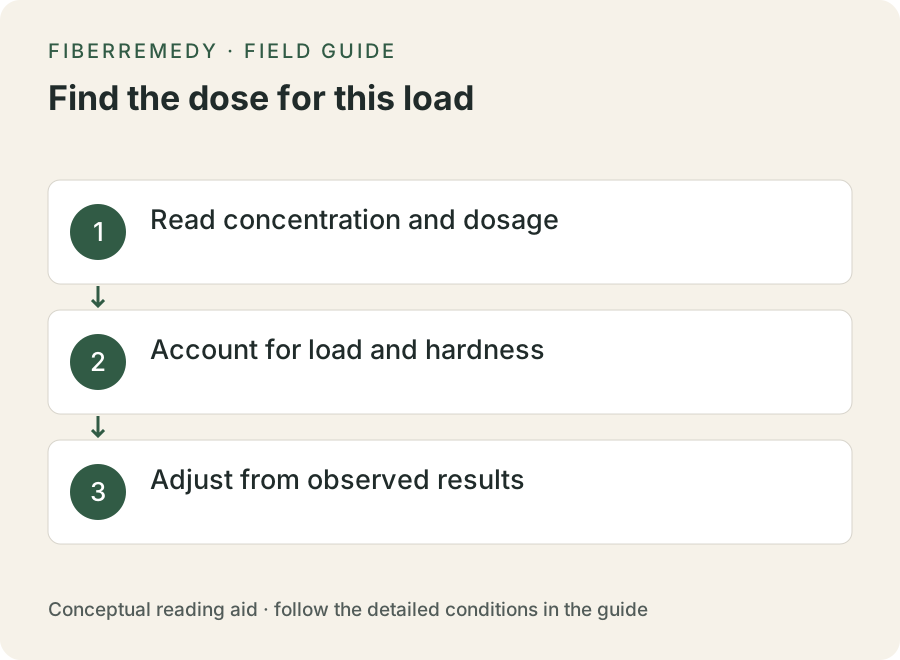
Adjust one variable per wash: load size, the label-based dose or the rinse setting permitted by the machine. Keep notes on feel and visible residue after drying. Adding several boosters at once makes it difficult to identify which change helped.
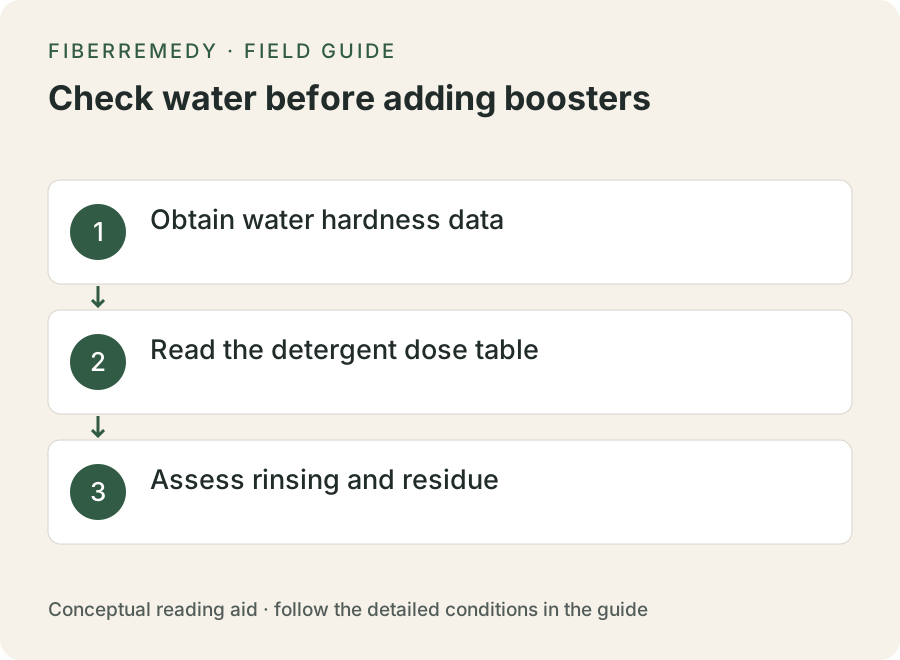
- Obtain water hardness data
- Read the detergent dose table
- Assess rinsing and residue
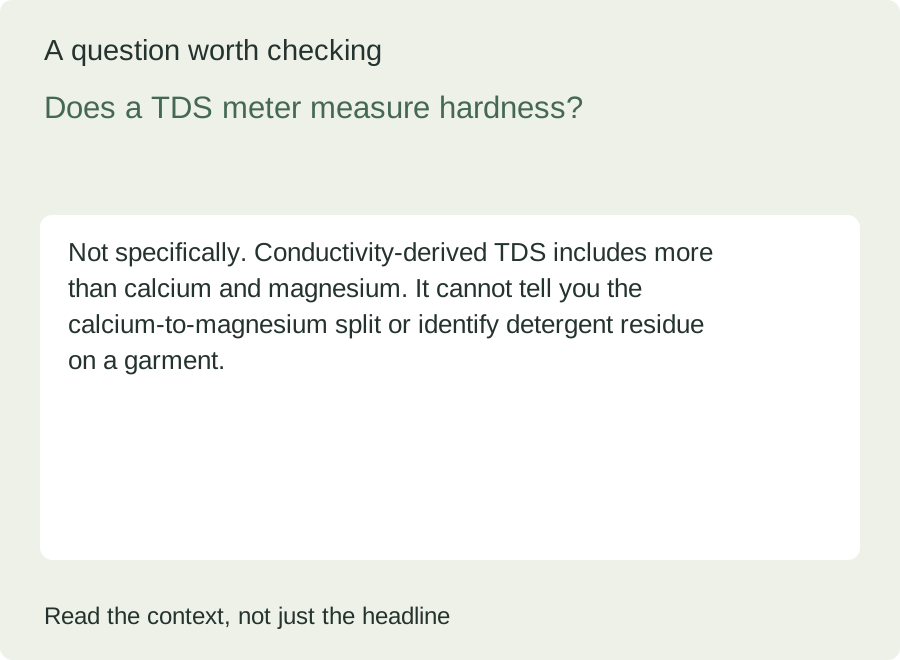
Does a TDS meter measure hardness?
Not specifically. Conductivity-derived TDS includes more than calcium and magnesium. It cannot tell you the calcium-to-magnesium split or identify detergent residue on a garment.
For more context, see the topic FAQ and glossary. A reference value or example should be read with its units, assumptions and product-specific conditions.
Sources and scope
The references below were supplied with the original manuscript. A reference is not evidence that every numerical claim has been independently checked. See the source library and our verification status.
- Smulders, E. (2002) — Laundry Detergents: Builder Systems, Complexing Agents, and Ion Exchange (Wiley-VCH)
- Bajpai, D. & Tyagi, V. K. (2007) — Laundry Detergents: An Overview of Surfactant-Builder Interactions (Journal of Oleo Science)
- USGS Water Science School — Water Hardness Classification and CaCO3 Grain-per-Gallon Equivalents
Put the explanation to work
Continue reading
Spot a questionable claim or a calculation issue? Read our correction process and contact information. Examples and illustrations are educational; they do not establish product suitability or a laboratory result.