 FiberRemedy
Enzyme Science
Cellulase, pilling and faded cotton
A dark shirt can look pale because of abrasion, deposits or dye loss.
Before you start
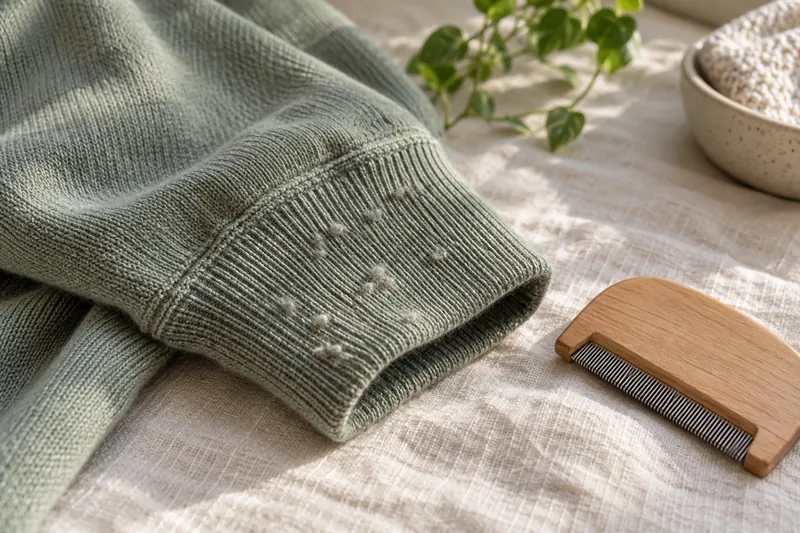
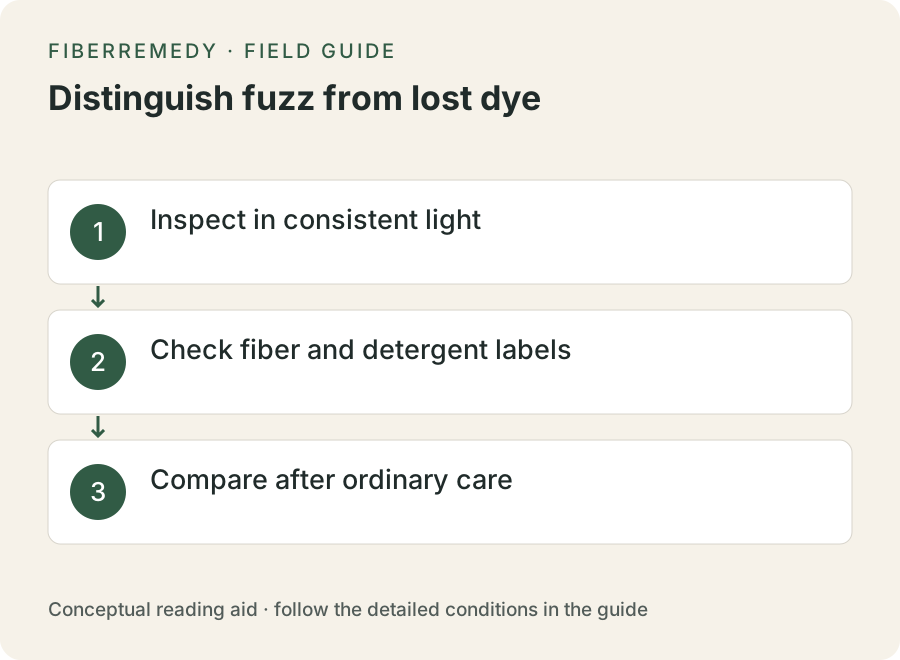
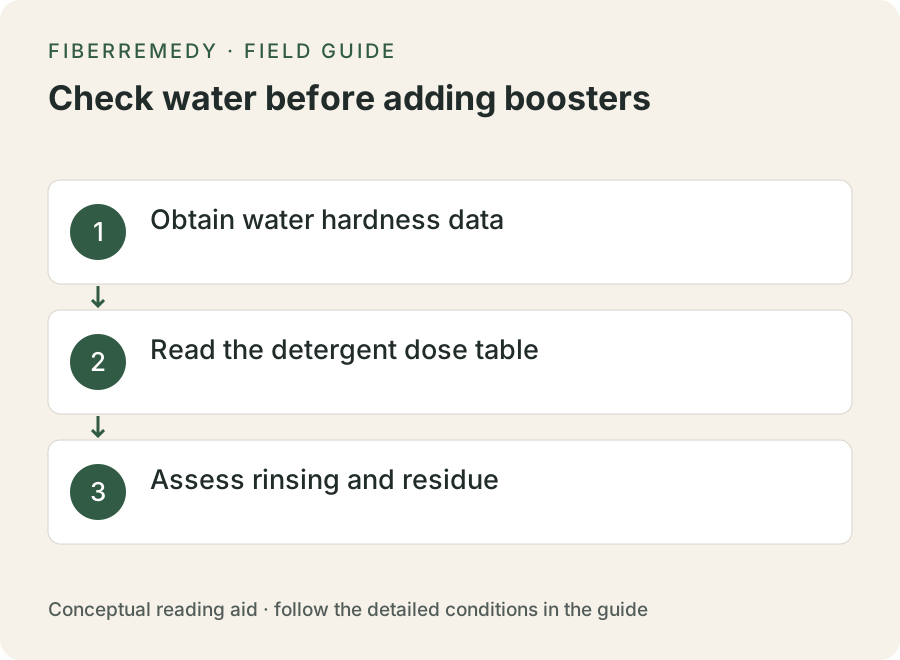
A dark shirt can look pale because of abrasion, deposits or dye loss. These are not interchangeable diagnoses. Look at seams and low-wear areas under the same light before deciding that an enzyme-containing detergent will help. No detergent can promise to restore dye that has already left the fabric.
Why Black Cotton T-Shirts Look Gray and Faded Even When the Dye Is Still There
When a favorite black, navy, or forest-green 100\\% cotton t-shirt or sweatshirt begins looking dusty, chalky, and washed-out after a dozen laundry cycles, most people assume the dye has washed down the drain.
Surface fibrillation can contribute to a pale or dusty appearance by scattering light. Dye loss and deposits can also contribute. The inherited manuscript did not provide an identifiable study supporting a universal percentage, so no numerical contribution is claimed here.
Diffuse Light Scattering by Microfibrils (1\–5\ \μm)
A single cotton fiber is a hierarchical composite built from concentric layers of crystalline cellulose microfibrils arranged in a spiral around a central hollow lumen. During wear and tumble-washing, wet mechanical friction peels thousands of ultra-fine microfibrils (1\ to 5\ μm in diameter—less than one-fifth the thickness of the parent cotton fiber) outward from the cuticle and primary wall of the yarn.
- Optical Path Length Is Too Short for Dye Absorption: According to the Beer-Lambert Law (
A = epsilon · c · l), a dyed fiber only appears deeply colored when light travels through a sufficient path length (l) of dye molecules before reflecting back to your eye. Because split microfibrils have a cross-sectional thickness of only1\–3\ μm, incident white light scatters off their air-cellulose boundaries before the dye inside can absorb the light. - The Frosted-Glass Effect: Exactly like scratching a piece of black glass with sandpaper turns the surface white, a dense forest of unaligned
2 μmcotton microfibrils scatters broadband white ambient light in all directions (Mie and diffuse reflectance). Your brain integrates this white surface scatter with the black yarn underneath and perceives the shirt as dusty charcoal gray. - Particulate Soil Entrapment: Worse still, those frayed, amorphous microfibrils expose disorderly hydroxyl groups that trap microscopic clay, skin cells, and hard-water calcium carbonate crystals during the rinse cycle, cementing a permanent gray halo across the knit surface.
The Four Mechanical Stages of Fabric Pilling
In textile testing (measured via ISO 12945-2 Martindale or ASTM D3512 Random Tumble Pilling Tester), surface fuzz progresses into unsightly fabric pills through four distinct physical stages:
- Stage 1 — Fibrillation & Fuzz Formation: Mechanical abrasion pulls loose fiber ends and split cellulose microfibrils out of the yarn twist to form a upright fuzzy nap.
- Stage 2 — Entanglement: Cyclic rubbing during wear (under the arms, where a backpack strap rubs, or between thighs) and inside the washing drum twists adjacent microfibrils into tangled knots.
- Stage 3 — Pill Compaction: Continued rotary friction compacts the tangled knot into a dense spherical ball (pill) that traps lint from other garments in the wash load.
- Stage 4 — Anchor-Fiber Retention vs Wear-Off: The pill remains tethered to the garment surface by intact anchor fibers.
- On
100\\%wool or100\\%weak-spun cotton, anchor fibers eventually fatigue and snap off, allowing pills to shed naturally. - On cotton/polyester blends (e.g.,
60/40fleece or jersey), high-tenacity polyester filaments act as unbreakable steel cables holding the cotton pills permanently anchored to the garment surface—which is why poly-cotton blends pill far worse and retain pills far longer than100\\%cotton!
- On
How Cellulase Enzymes (EC 3.2.1.4) “Biopolish” Cotton in the Wash
Among the five major classes of laundry enzymes, cellulase (beta-1,4-glucan-4-glucanohydrolase, EC 3.2.1.4) is unique: it is the only enzyme engineered to act on the fabric substrate itself rather than on food or body stains.
Why Cellulase Cleaves Fuzz Without Destroying the Whole Shirt
A natural question arises: if cellulase digests cellulose, why doesn’t a cellulase detergent dissolve my entire cotton t-shirt into glucose?
The answer lies in the structural difference between crystalline cellulose inside the intact yarn core and amorphous cellulose in damaged surface microfibrils, combined with the targeted selection of endoglucanase enzymes:
| Cellulose Region / Enzyme Type | Polymer Chain Packing | Accessibility to Laundry Endoglucanase | Result After 20 Wash Cycles |
|---|---|---|---|
| Intact Yarn Core (Crystalline Cellulose I) | Tightly hydrogen-bonded parallel chains | Inaccessible (enzyme active-site cleft cannot fit) | No product-specific strength result verified here |
| Frayed Surface Microfibrils & Pills (Amorphous) | Disordered, hydrated, mechanically stressed chains | Highly Accessible to endoglucanase binding | Hydrolyzed at base; snaps off cleanly during tumble agitation |
| Complete Fungal Cellulase Complex (Industrial) | Contains exoglucanases (cellobiohydrolases) + endoglucanases | Aggressive; attacks both amorphous & crystalline regions | Used once at textile mill for stone-washing; too strong for daily laundry |
| Engineered Laundry Care Endoglucanase (GH Family 45) | Single-component neutral/alkaline endoglucanase | Strictly Amorphous-Selective | Use only as directed for a compatible garment; outcomes vary |
Modern domestic laundry detergents do not use crude whole-cellulase mixtures. Instead, they use genetically engineered single-component alkaline endoglucanases (typically from Humicola insolens or Bacillus species, Glycoside Hydrolase Family 45 or 5). These enzymes lack the crystalline cellulose-binding domains needed to attack intact, tightly packed cotton fibers. Instead, their catalytic cleft binds exclusively to the loose, hydrated beta(1→ 4) glucosidic chains of frayed, amorphous microfibrils sticking out from the yarn surface.
Once the endoglucanase nicks a few beta(1→ 4) bonds at the stressed base of a microfibril or pill anchor, gentle hydrodynamic shear from the rotating wash water snaps the weakened fibril off cleanly—a process textile engineers call biopolishing or enzymatic defibrillation.
Step-by-Step Protocol to Revive Faded, Pilled Cotton Knitwear
If you have faded black cotton t-shirts, hoodies, or cotton-modal loungewear dulled by microfibril fuzz:
- Choose a True Cellulase-Containing Liquid or Pod Detergent: Check the manufacturer’s ingredient disclosure sheet (under EU Detergent Regulation or US SmartLabel) specifically for Cellulase (sometimes listed as * Carezyme* or Endoglucanase). Note that many bargain “bio” detergents include only protease and amylase for food stains and omit cellulase due to cost.
- Run a Dedicated Biopolishing Restoration Wash (
40 °C):- Turn all dark cotton knitwear inside-out for regular washes to prevent abrasion, except when running a deliberate de-pilling restoration cycle—for a restoration cycle, leave the garments right-side out and wash them ONLY with other soft cotton knits (never with zippered jeans or rough canvas, which cause new mechanical damage).
- Dose
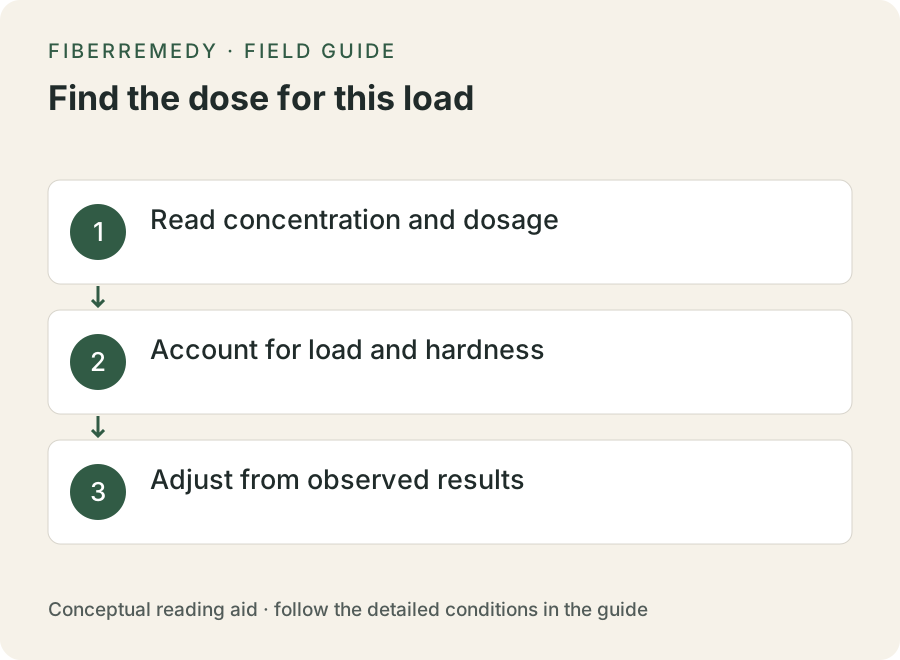
25 mLof a high-cellulase detergent +15 g(1 tablespoon) of Trisodium Citrate (to strip away any light-scattering calcium soap film sitting on the fuzz). - Select a
40 °C(104 °F) Cotton cycle lasting at least60 to 90 minutes. Cellulase requires both thermal activation (35\–45 °C) and gentle wet mechanical tumbling to snap off the enzymatically nicked microfibrils.
- Fiber Safety Warning (Linen & Damaged Vintage Cotton): Follow both the garment label and the detergent instructions. Suitability is not guaranteed by the enzyme name. Avoid experimenting with repeated long cellulase soaks on heirloom/fragile antique lace or damaged 100+ year-old linen, where age-degraded cellulose has high amorphous content throughout the fiber cross-section.
Compare endoglucanase against protease, amylase, lipase, and mannanase in Laundry Enzymes Explained: Protease, Amylase, Lipase, Cellulase & Mannanase, learn how to protect dark dyes in Raw Indigo Denim and Reactive Dye Crocking, and verify cycle settings in our ISO 3758 & ASTM D5489 Garment Care Symbol Decoder.
Practical check: what to observe
Photograph the garment dry before and after a normal permitted wash. Keep exposure and lighting unchanged. Record changes in fuzz separately from changes in color; a brighter photograph is not evidence of a measured percentage of color restoration.
- Inspect in consistent light
- Check fiber and detergent labels
- Compare after ordinary care
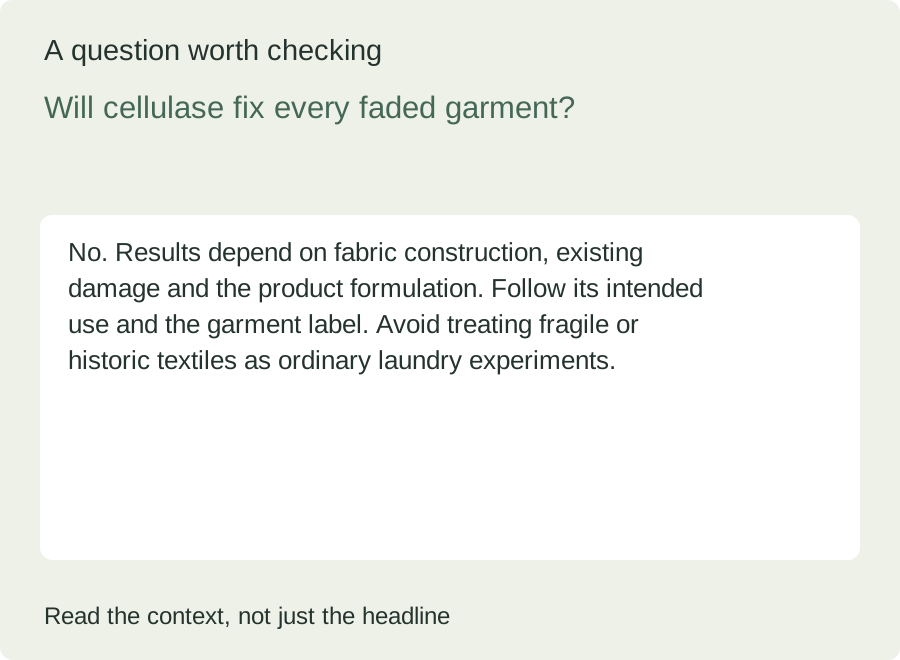
Will cellulase fix every faded garment?
No. Results depend on fabric construction, existing damage and the product formulation. Follow its intended use and the garment label. Avoid treating fragile or historic textiles as ordinary laundry experiments.
For more context, see the topic FAQ and glossary. A reference value or example should be read with its units, assumptions and product-specific conditions.
Sources and scope
The references below were supplied with the original manuscript. A reference is not evidence that every numerical claim has been independently checked. See the source library and our verification status.
- Cavaco-Paulo, A. (1998) — Mechanism of Cellulase Action in Textile Processes: Biopolishing and Defibrillation (Carbohydrate Polymers)
- ISO 12945-2 / ASTM D3512 — Standard Test Method for Pilling Resistance and Other Related Surface Changes of Textile Fabrics
- Sazin, S. et al. (2019) — Effect of Cellulase Care Enzymes on Color Maintenance and Microfibril Removal in Domestic Laundering
Put the explanation to work
Continue reading
Spot a questionable claim or a calculation issue? Read our correction process and contact information. Examples and illustrations are educational; they do not establish product suitability or a laboratory result.