 FiberRemedy
Fiber & Fabric Care
Denim dye transfer and colorfastness
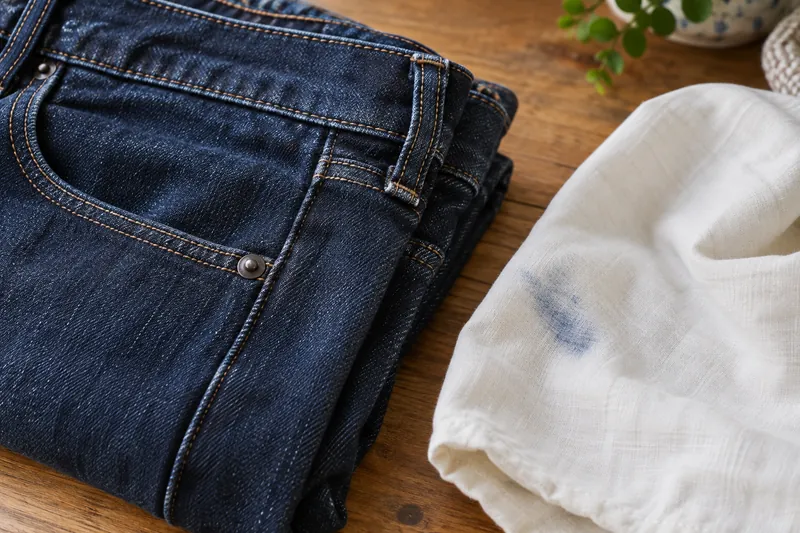
A denim item can transfer color through rubbing even without being washed.
Before you start
A denim item can transfer color through rubbing even without being washed. Think about pale upholstery, shoes and bags as well as the laundry load. Color that comes off into water does not show whether the garment has become permanently colorfast.
Why Raw Indigo Jeans Stain White Sneakers and Sofas: The Physics of Crocking
In textile engineering, the rubbing off of color from a dry or damp fabric onto another surface by mechanical friction—without the garment even entering a washing machine—is called crocking (quantified via AATCC Test Method 8 using a standardized mechanical finger known as a Crockmeter). By contrast, dye that dissolves into wash water and re-dyes adjacent garments in the drum is called color bleeding or wash-down.
Raw (unwashed) selvedge and indigo denim exhibits the highest dry and wet crocking rate of any modern apparel textile. This is not a manufacturing defect; it is the deliberate result of indigo vat ring-dyeing.
Leuco-Indigo Reduction and Ring-Dyeing
Unlike fiber-reactive dyes (which form permanent covalent ether or ester bonds with cotton cellulose hydroxyl groups), Indigo (C.I. Vat Blue 1, C_{16H_{10N₂O₂) is completely insoluble in water and possesses near-zero chemical substantivity for cotton fibers.
To apply indigo to cotton warp yarns at the denim mill:
- Insoluble blue indigotin powder is chemically reduced in a strongly alkaline bath (
pH 11.5\–12.5) using sodium dithionite (Na₂S₂O₄, sodium hydrosulfite) into water-soluble, pale-yellow leuco-indigo (the enolate dianion form). - Cotton warp yarns are dipped briefly (
15\–30\ seconds) into the leuco-indigo bath and immediately pulled into the air (skyed). - Because the dip is intentionally kept brief and held at a controlled alkaline pH, leuco-indigo penetrates only the outer
15\\%\ to 25\\%circumference of the twisted cotton yarn, leaving the inner core of the yarn stark white (ring-dyeing). - Upon exposure to atmospheric oxygen (
O₂), soluble leuco-indigo instantly oxidizes back into insoluble blue indigotin microcrystals that are trapped purely by mechanical entanglement and weak van der Waals forces on the exterior of the cotton fibrils.
Because those outer indigo microcrystals are not covalently bonded to the cotton cellulose, every time your cuffs rub against white leather sneakers or your back pocket slides across a light-colored linen sofa, shear friction flakes microscopic crystalline indigo layers off the yarn surface. Furthermore, when cotton swells in water or sweat, wet crocking increases by 200\\%\ to 300\\% compared to dry fabric.
Debunking the “Soak in Vinegar or Salt to Set Dye” Myth
One of the most persistent myths in household laundry is that soaking a new red cotton sweatshirt or pair of blue jeans in a bucket of white vinegar (5\\% acetic acid) or table salt (NaCl) will permanently “set” or “lock in” the dye so it never bleeds again.
Here is why textile chemists strongly caution against this myth on cotton garments:
1. Why Vinegar Fails on Cotton Dyes
Acetic acid (CH₃COOH) protonates amino groups (-NH₂ → -NH₃⁺) on protein and polyamide fibers (wool, cashmere, silk, and nylon), creating positively charged sites that electrostatically bind negatively charged acid dyes. Cotton, linen, rayon, and modal are 100\\% carbohydrate cellulose polymers: they contain zero amino groups. Soaking cotton in vinegar cannot create cationic dye-binding sites; worse, acidic water can slowly hydrolyze certain vinyl sulfone reactive dye linkages or precipitate hard-water soap films onto the yarn.
2. Why Table Salt (NaCl) Does Not Permanently Fix Unbonded Dye
During industrial dyeing of cotton with direct dyes or fiber-reactive dyes, dyehouses add huge quantities of Glauber’s salt (Na₂SO₄) or sodium chloride (50\–80 g/L) to suppress the negative surface zeta potential of cotton so anionic dye molecules can approach the fiber closely.
- For reactive dyes, permanent covalent bonding requires adding a strong alkali (soda ash /
Na₂CO₃atpH 10.8\–11.2at60 °C) followed by boiling soap-off washes to flush away hydrolyzed (un-reacted) dye. - If a cheap garment bleeds red or blue in your home sink, that bleeding color is hydrolyzed reactive dye (whose reactive chlorine or vinyl group already reacted with water in the factory instead of the cotton) or unfixed direct dye. Soaking it in salt water at home merely pushes that loose dye temporarily back onto the cotton surface via the common-ion salting-out effect—only for it to bleed right back out during the very next low-salt rinse cycle!
| Dye Class & Target Fiber | Bonding Mechanism | Why It Bleeds or Crocks | Real Household Remediation |
|---|---|---|---|
| Vat Dye (Indigo on Denim) | Mechanical ring-entanglement (insoluble crystal) | Shear abrasion flakes surface crystals (Crocking) | Inside-out cold wash; mild non-ionic detergent; zero spin abrasion |
| Fiber-Reactive Dye (Bright Cotton) | Covalent ether/ester bond to cellulose -OH |
Factory failed to soap off hydrolyzed loose dye | Initial isolated warm wash with PVP/PVNO dye-catcher sheet |
| Direct Dye (Inexpensive Cotton/Rayon) | Weak hydrogen bonding & van der Waals forces | High water solubility above 30 °C |
Cold wash (20 °C) + cationic polyamine dye fixative (e.g., Retayne) |
| Acid Dye (Wool, Silk, Nylon) | Ionic salt linkage (-NH₃⁺ ·s {⁻O₃S-Dye) |
Alkaline detergent (pH > 8) strips proton |
Wash at pH 5.5\–6.8; 1 tsp citric/acetic acid in final rinse |
How Polymeric Dye-Transfer Inhibitors (PVP & PVNO) Prevent Pink Laundry
Instead of trying to “set” loose hydrolyzed dye back onto a bleeding garment with salt, modern laundry science uses sacrificial dye-catcher sheets and liquid polymeric dye-transfer inhibitors (DTIs):
- Cellulose Cationic Scavenger Sheets: Commercial color-catcher sheets are made from high-surface-area regenerated cellulose fibers pre-treated with a permanently bonded quaternary ammonium cationic polymer (such as 3-chloro-2-hydroxypropyltrimethylammonium chloride). Because fugitive direct and hydrolyzed reactive dyes carry negative sulfonate (
-SO₃⁻) charges in wash water, the positively charged sheet acts as an electrostatic magnet, irreversibly binding loose dye anions out of the water before they can settle onto your white cotton shirts. - Soluble PVP and PVNO Polymers: Premium color-care liquid detergents incorporate poly(vinylpyrrolidone) (PVP) or poly(4-vinylpyridine-N-oxide) (PVNO). These water-soluble polymers form strong dipolar and amphiphilic complexes with planar aromatic dye molecules in the wash liquor, keeping fugitive dyes suspended in solution so they drain harmlessly out of the drum.
How to Rescue White Clothes Accidentally Dyed Pink or Blue
If a red sock or new pair of jeans sneaks into a white cotton load and turns your shirts pink or light blue:
- NEVER Tumble Dry the Load: Heat drives fugitive direct dye molecules deeper into the amorphous regions of cotton and nylon fibers. Keep every stained garment wet.
- Stage 1 — High-Temp Oxygen Bleach + Surfactant Strip (For White & Colorfast Cotton): Re-wash the affected white cotton garments immediately at
60 °C(140 °F) with45 g(3 tablespoons) of Sodium Percarbonate,25 mLof liquid detergent, and 2 commercial color-catcher sheets in the drum. The alkaline surfactant desorbs unfixed dye while the percarbonate oxidizes the chromophore and the cationic sheets trap the desorbed anions. - Stage 2 — Sodium Dithionite (Hydrosulfite) Reductive Color Run Remover: If oxygen bleach fails to remove a stubborn vat or direct dye transfer on white fabrics (including white wool or nylon that cannot tolerate high-alkali percarbonate), use a commercial sodium dithionite (
Na₂S₂O₄) color-run remover in a well-ventilated sink at50\–60 °C. Sodium dithionite is a powerful reducing agent that cleaves azo (-N=N-) chromophores into colorless amines and reduces indigo vat transfers into water-soluble leuco-indigo so they rinse completely out of the fabric.
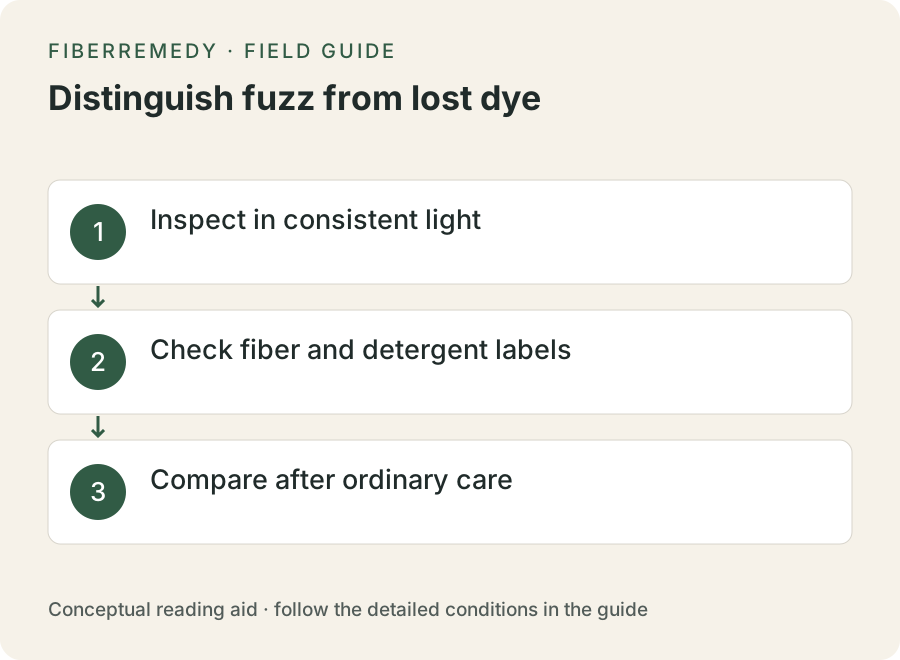
See how enzymatic defibrillation removes light-scattering surface fuzz on dark cotton in Cellulase Antipilling: How Enzyme Biopolishing Restores Faded Cotton Knitwear, review oxidative vs. reductive bleaching in Sodium Percarbonate vs. Sodium Hypochlorite, and check dye-transfer remedies in our Stain Chemistry × Textile Fiber Safety Lookup Matrix.
Practical check: what to observe
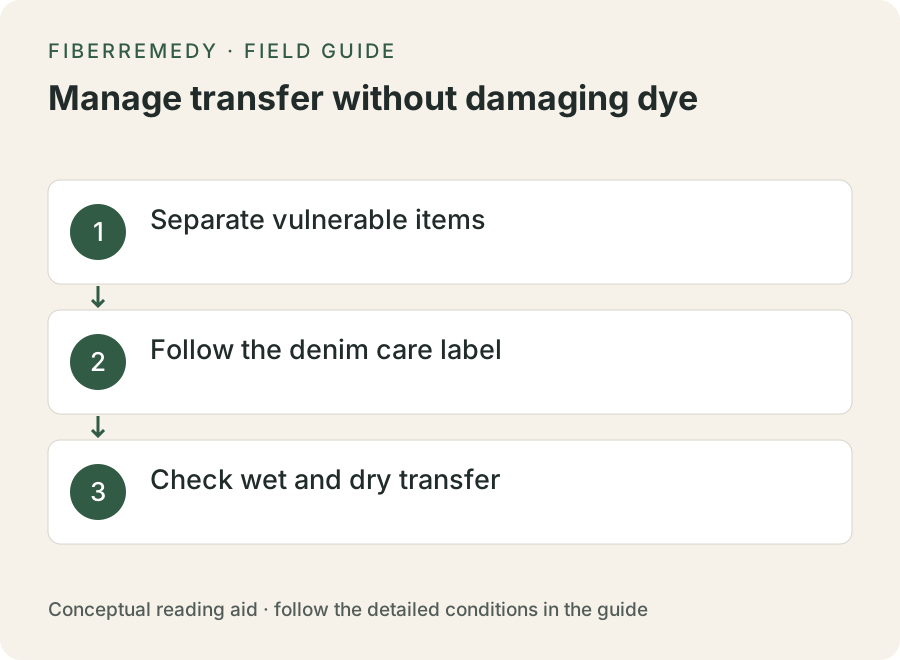
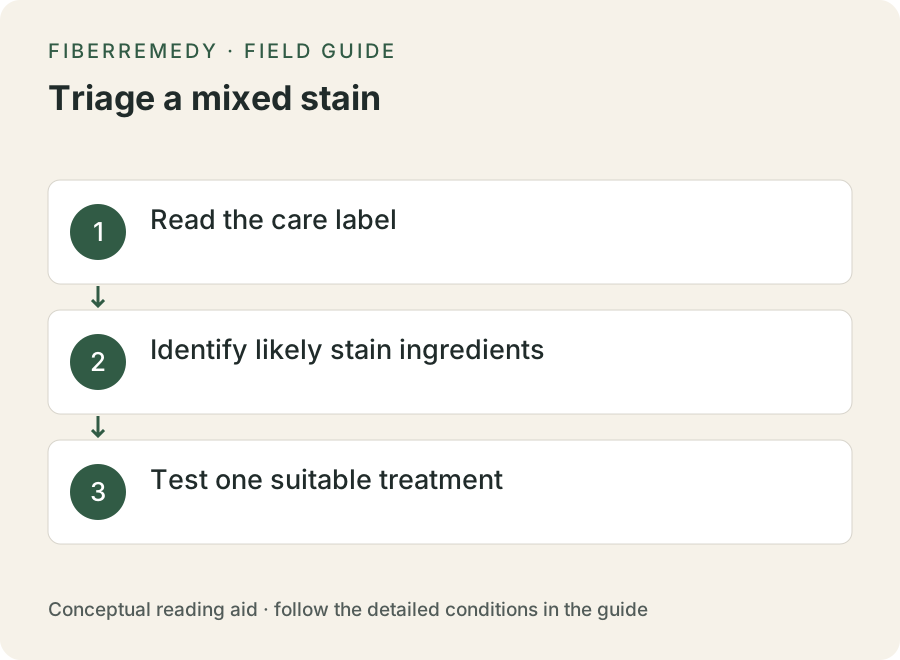
Keep a record of when transfer occurs and follow the maker’s guidance for washing the item separately. Do not test aggressively on a visible area. If color has moved onto another garment, inspect its care label before selecting a color-run treatment.
- Separate vulnerable items
- Follow the denim care label
- Check wet and dry transfer
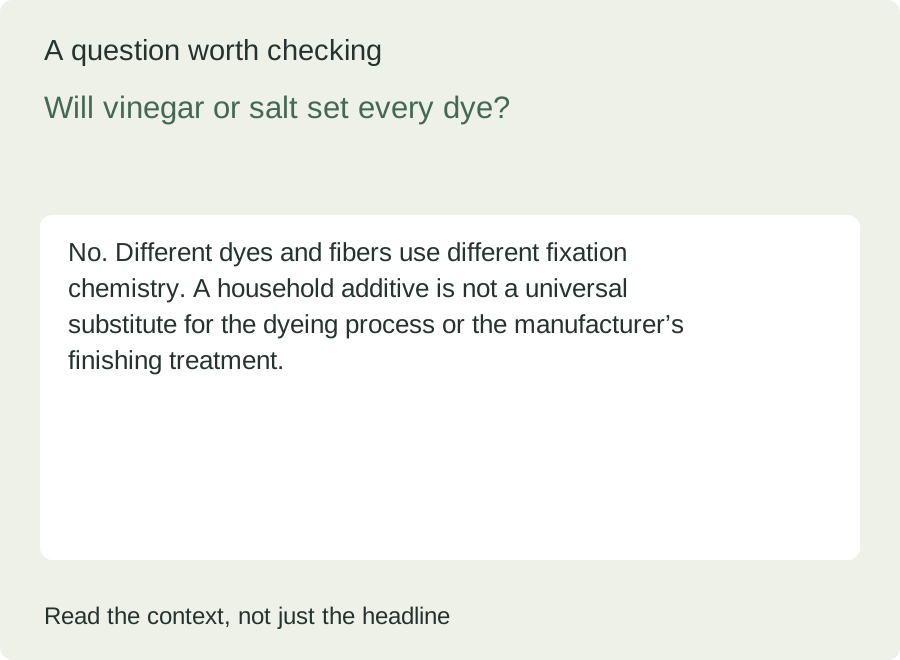
Will vinegar or salt set every dye?
No. Different dyes and fibers use different fixation chemistry. A household additive is not a universal substitute for the dyeing process or the manufacturer’s finishing treatment.
For more context, see the topic FAQ and glossary. A reference value or example should be read with its units, assumptions and product-specific conditions.
Sources and scope
The references below were supplied with the original manuscript. A reference is not evidence that every numerical claim has been independently checked. See the source library and our verification status.
- AATCC Test Method 8 — Colorfastness to Crocking: Crockmeter Method (Wet and Dry Rubbing)
- Blackburn, R. S. et al. (2009) — Fundamental Mechanisms of Indigo Ring-Dyeing and Crocking on Cotton Denim (Coloration Technology)
- Boardman, C. & Jarvis, A. N. (2000) — Polymeric Dye Transfer Inhibitors in Domestic Detergents: PVP and PVNO Complexation
Put the explanation to work
Continue reading
Spot a questionable claim or a calculation issue? Read our correction process and contact information. Examples and illustrations are educational; they do not establish product suitability or a laboratory result.