 FiberRemedy
In pictures
One picture explains detergent caps, milliliters and guesswork
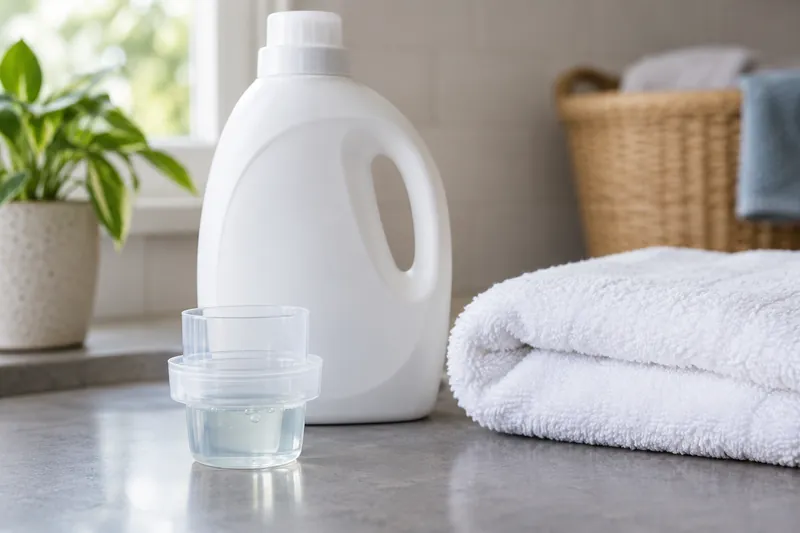
A cap is a container, not a standardized dose.
Before you start
A cap is a container, not a standardized dose. This simple unit example shows why the product label and its actual markings matter.
Find the amount the label means
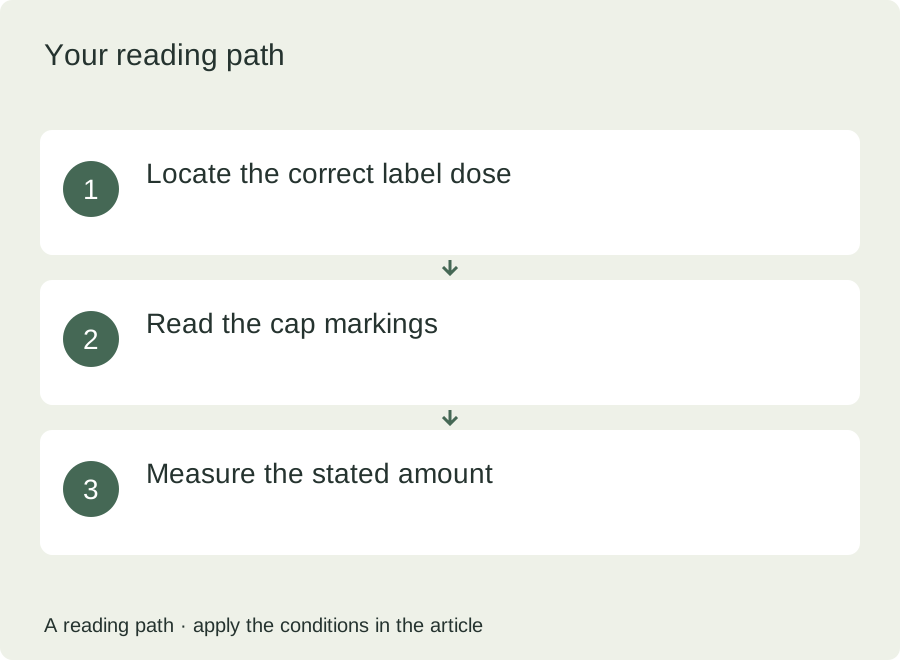
Locate the dose recommended for your machine, load and local conditions. Check whether the instruction refers to a cap line, milliliters or another measure. A cap with several lines can be easy to misread, especially when transparent markings disappear against a pale liquid. Use the product’s supplied measurement system.
Work through a hypothetical example
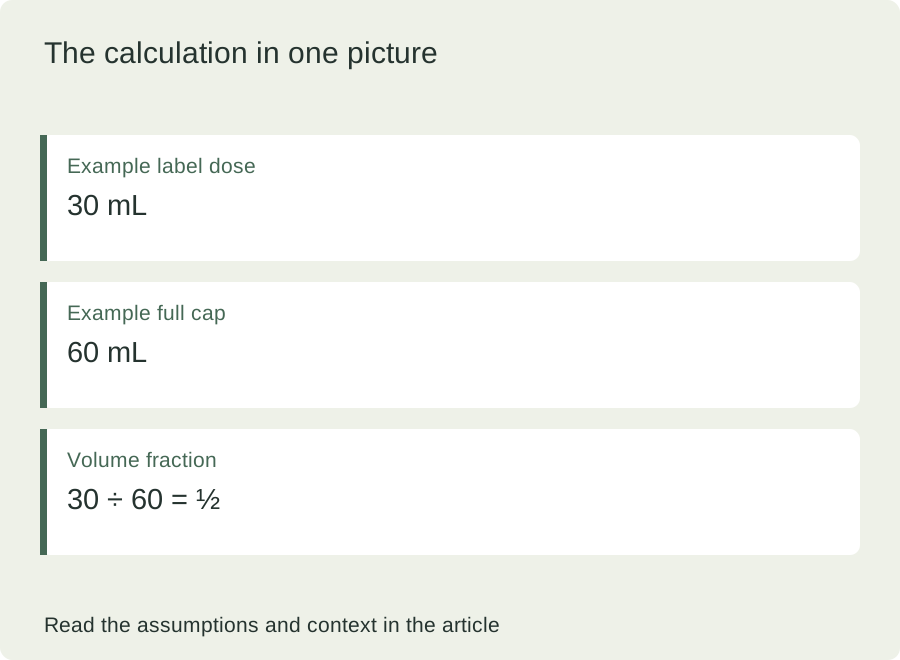
Suppose a particular product instructs you to use 30 mL for the load in front of you, and its marked full cap holds 60 mL. The instructed volume is half that full-cap volume: 30 divided by 60 equals 0.5. This is arithmetic about the example, not a recommendation to use 30 mL of every detergent.
Do not turn volume into a universal formula
Different concentrations and formulations prevent straightforward cap-to-cap comparisons. A half-size laundry load also does not automatically call for half the dose unless the directions support that adjustment. Water conditions, soil and machine design can matter. Follow the dose table for the actual product instead of inventing a linear rule.
Read the line, then check the unit
A label that says line 2 on the supplied cap is not saying two full caps. Likewise, a milliliter quantity should not be read as grams without an appropriate conversion basis. Before using a new product, match the instruction to the markings on its own measure. In the hypothetical 30 mL example, filling a 60 mL cap to the top would deliver twice the stated volume. The arithmetic diagnoses a reading mistake; it does not establish what dose your load needs. Keep the measurement question separate from the product-specific dosing decision.
Make measurement repeatable
Keep the correct cap with the bottle, read the line under good light and record the measured dose when troubleshooting. Do not use an unlabeled food container that could confuse another household member. If the markings are unreadable, seek the maker’s guidance rather than substituting a cap from another product.
Practical check: what to observe
Work through the numbers using the stated units. The examples are illustrative; changing an input or an assumption can change what the result means.
- Locate the correct label dose
- Read the cap markings
- Measure the stated amount
Are detergent pods interchangeable with liquid doses?
No. Follow the pod product’s directions and handling information. This liquid-volume example does not convert pods, powders or different formulations.
For more context, see the topic FAQ and glossary. A reference value or example should be read with its units, assumptions and product-specific conditions.
Sources and scope
The numerical examples use the arithmetic and assumptions shown in the article. They are hypothetical illustrations, not measurements of a tested product. Read the editorial policy for sourcing, AI assistance and corrections.
Put the explanation to work
Continue reading
Spot a questionable claim or a calculation issue? Read our correction process and contact information. Examples and illustrations are educational; they do not establish product suitability or a laboratory result.