 FiberRemedy
In pictures
How much laundry is a full load? Start with dry weight
A drum that looks spacious can still contain an unsuitable load.

Before you start
A drum that looks spacious can still contain an unsuitable load. Weight is one useful measurement, but the machine’s program instructions remain the limit.
Read the program-specific capacity
The capacity on the front of a machine may not apply to every program or textile type. Consult the manual for the intended cycle. Bulky items can take up space differently from compact ones, so a weight number alone does not tell you whether the items can move as intended.
Use a simple weighing method
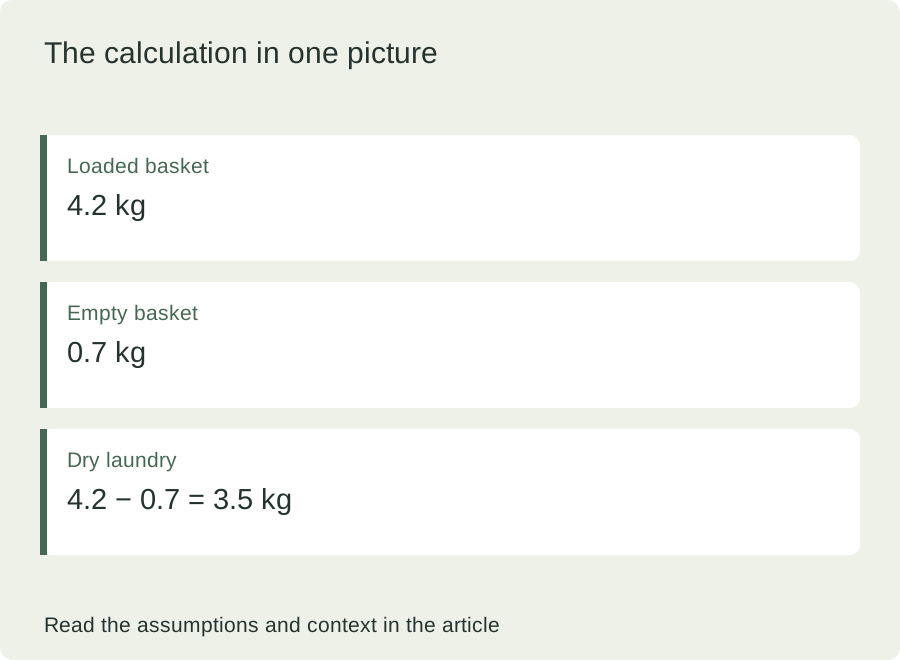
For an arithmetic example, a basket with dry laundry weighs 4.2 kg and the empty basket weighs 0.7 kg. Subtract the container: the laundry weighs 3.5 kg. Weigh on a stable surface within the scale’s limits. Do not add water weight and compare it to a dry-load specification.
Keep volume in the decision
A large duvet may reach a practical fit limit before a pile of thin shirts with the same mass. Do not force an item into the drum because your subtraction came in under a headline capacity. Read the manual’s instructions for bulky textiles and the item’s own care label.
Use subtraction consistently
A second example makes the container issue clear: an empty basket weighs 0.9 kg and the loaded basket weighs 5.0 kg. The dry laundry mass is 4.1 kg. Comparing the full 5.0 kg with a dry-laundry specification would count the basket even though it never enters the machine. Record the measurement basis so you do not compare a dry load one week with a damp load another week. The result is still only one part of the decision; the program limit, bulk and item-specific instructions determine whether that load belongs in the machine together.
Use the measurement to learn
You rarely need to weigh every ordinary load forever. A few observations can show what your usual basket represents and prevent repeated overfilling. Keep a note for a familiar category of clothing. Recheck when you change the machine, program or type of item rather than assuming the old visual cue transfers.
Practical check: what to observe
Work through the numbers using the stated units. The examples are illustrative; changing an input or an assumption can change what the result means.
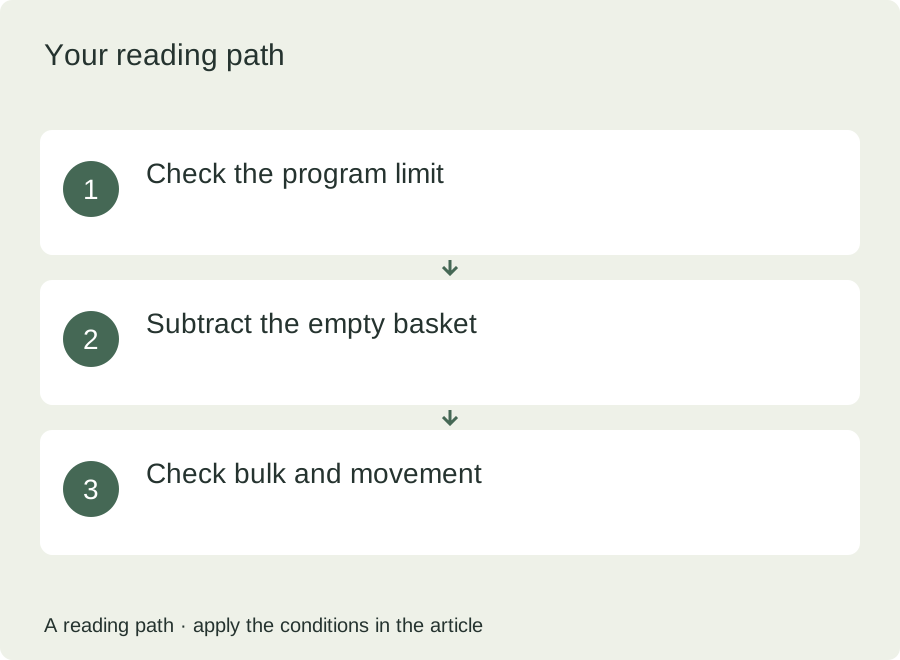
- Check the program limit
- Subtract the empty basket
- Check bulk and movement
Does the biggest advertised capacity apply to wool?
Do not assume so. Read the manual for the wool or delicate program and follow the garment-care instructions.
For more context, see the topic FAQ and glossary. A reference value or example should be read with its units, assumptions and product-specific conditions.
Sources and scope
The numerical examples use the arithmetic and assumptions shown in the article. They are hypothetical illustrations, not measurements of a tested product. Read the editorial policy for sourcing, AI assistance and corrections.
Put the explanation to work
Continue reading
Spot a questionable claim or a calculation issue? Read our correction process and contact information. Examples and illustrations are educational; they do not establish product suitability or a laboratory result.